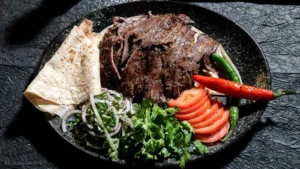
When people ask us about beef, they’re usually trying to answer one simple question: which one will cook better for what I’m making? Ground chuck and ground beef may look similar in the package, but they behave very differently once they hit heat. We see that difference every day in how meat browns, holds moisture, and delivers flavor.
Below is the clear breakdown we use when choosing beef in a real kitchen.
Ground Chuck vs Ground Beef — Quick Answer
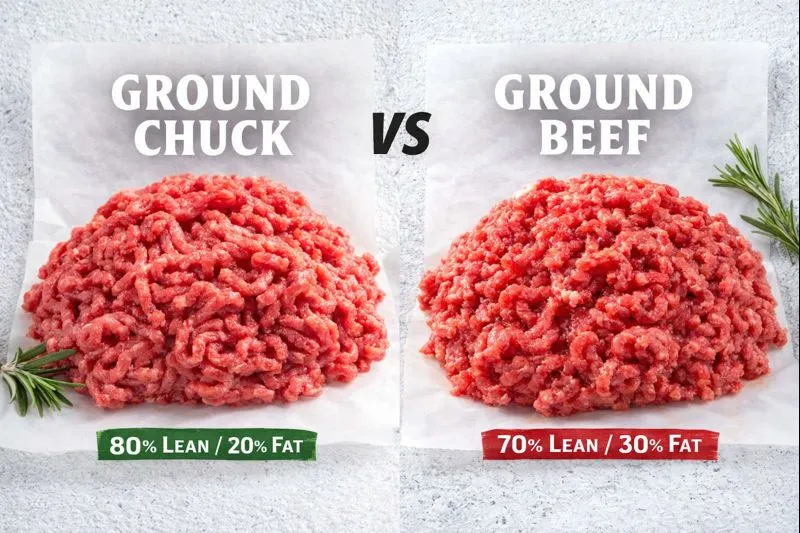
Ground chuck comes from a single cut of beef with a consistent fat balance, while ground beef is a broader category that can vary widely in texture and moisture depending on the mix.
Ground chuck (80/20) is slightly leaner than regular ground beef (70/30), which means it cooks a bit drier but delivers a stronger, more pronounced beef flavor since it comes entirely from the chuck primal. It works well for pasta sauces and dishes that call for beef crumbles. Regular ground beef, made from assorted trimmings blended with added fat, is juicier, cheaper, and more consistent for classic hamburger patties. Neither is objectively better — the right choice depends on whether you value flavor intensity or juiciness.
If you want juicier burgers with better structure, ground chuck usually performs better. If you want flexibility or a leaner option for mixed dishes, ground beef can make more sense.
At a glance
- Ground chuck: richer flavor, more consistent results, better moisture
- Ground beef: variable fat levels, more versatile, depends on the blend
| Feature | Ground Chuck | Ground Beef |
|---|---|---|
| Source Cut | Chuck roast (shoulder & neck area) | Blend of multiple cuts unless specified |
| Cut Consistency | Single, defined cut | Variable cuts depending on blend |
| Typical Lean-to-Fat Ratio | ~80% lean / 20% fat | Ranges from 70/30 to 93/7 |
| Price | Slightly more expensive | Generally more affordable |
| Fat Content | Moderate to high | Varies widely |
| Calories | Higher due to fat content | Lower in leaner blends |
| Flavor | Rich, beef-forward | Mild to moderate depending on blend |
| Juiciness | High | Varies (lean blends cook drier) |
| Cohesion When Cooking | Holds shape very well | Lean blends can crumble |
| Best For | Burgers, meatloaf, meatballs, patties | Chili, tacos, sauces, soups |
| Texture After Cooking | Firm, juicy | Softer or crumbly |
| Health Consideration | Higher fat and saturated fat | Leaner options available |
| Label Transparency | Usually clearly labeled | Requires checking cut & ratio |
| Cooking Margin for Error | More forgiving | Lean blends require precision |
What Is Ground Chuck?
Ground chuck is beef ground specifically from the chuck section of the cow, taken from the shoulder area.
Because it comes from one primary cut, it has a reliable balance of lean meat and fat, most commonly around an 80/20 ratio.
What we like about ground chuck:
- Comes from a single, well-defined cut
- Holds moisture better during cooking
- Produces a firmer, meatier bite
- Delivers a deeper beef flavor without tasting greasy
When we’re shaping patties or grilling beef where texture matters, this consistency makes a difference.
What Is Ground Beef?
Ground beef is a general term for beef that can come from multiple cuts, blended together.
The fat content is labeled (such as 90/10 or 85/15), but the actual cuts used can change from batch to batch.
What to know about ground beef:
- Can include trimmings from several cuts
- Fat level varies depending on the blend
- Texture can be softer or looser
- Flavor depends heavily on fat percentage
Ground beef works well when it’s mixed with other ingredients or sauces, where structure isn’t the main concern.
What’s the Difference Between Ground Chuck and Ground Beef?
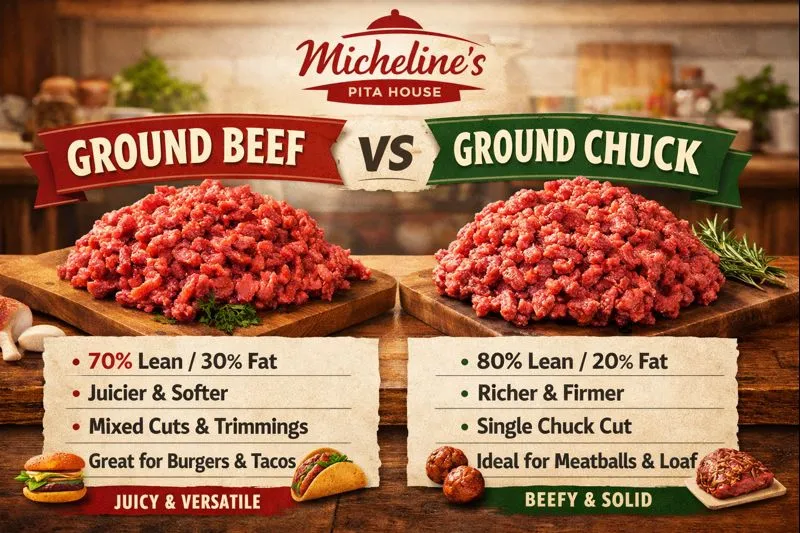
The real difference shows up once the meat cooks.
| Feature | Ground Chuck | Ground Beef |
|---|---|---|
| Cut source | Single cut (chuck) | Multiple cuts blended |
| Fat consistency | Stable, predictable | Varies by blend |
| Flavor | Rich, beef-forward | Depends on fat level |
| Texture | Firm, cohesive | Can be loose |
| Best uses | Burgers, patties, grilling | Sauces, tacos, meat mixtures |
This is why we don’t treat them as interchangeable in the kitchen, even if the fat percentage looks similar on the label.
Health Benefits of Ground Chuck (80/20)
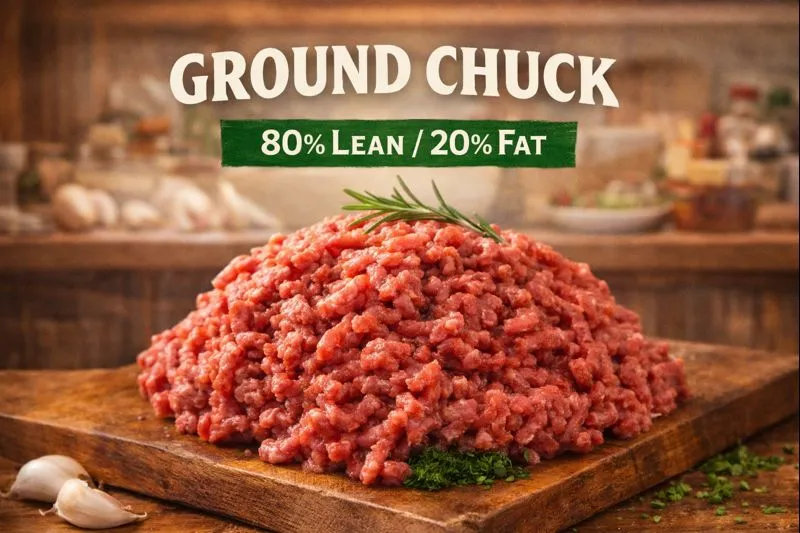
Ground chuck offers a balanced nutrient profile that supports muscle maintenance, satiety, and flavor-driven satisfaction.
Key Health Benefits
- Higher protein density per calorie than fattier blends
- Better satiety due to fat–protein balance, helping control portions
- Rich in iron and zinc, supporting energy levels and immune function
- Naturally occurring fats aid absorption of fat-soluble vitamins
When Ground Chuck Fits Best
- Balanced diets where flavor matters but excess fat is avoided
- Meals built around beef as the primary protein
- People who prefer moderate portions with fuller taste
Health Benefits of Regular Ground Beef (70/30)
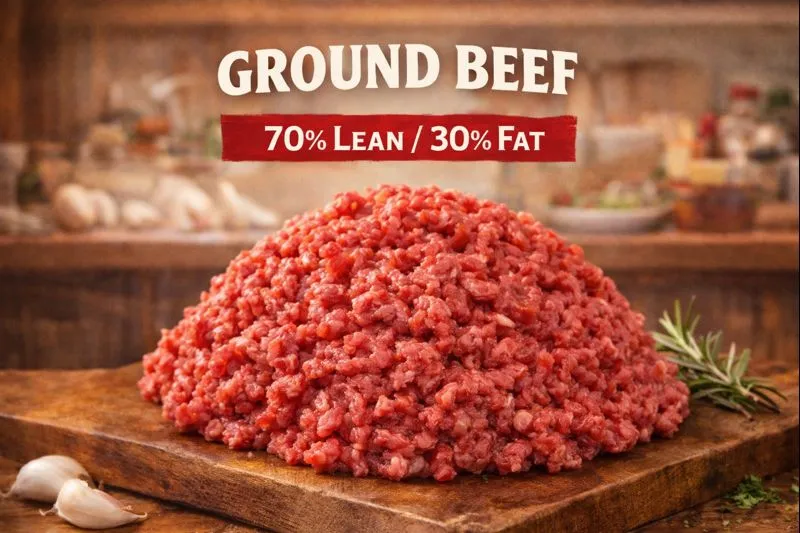
Regular ground beef is higher in fat, which affects calorie density but also supports certain nutritional advantages.
Key Health Benefits
- Higher energy density, useful for people with higher calorie needs
- Juiciness improves palatability, making meals more satisfying for some
- Still provides complete protein, iron, and B vitamins
- Fat content enhances flavor, which can reduce reliance on sauces
When Regular Ground Beef Fits Best
- Occasional indulgent meals
- Higher-calorie diets
- Situations where richness and moisture are priorities
| Health Factor | Ground Chuck (80/20) | Regular Ground Beef (70/30) |
|---|---|---|
| Protein per calorie | Higher | Lower |
| Total calories | Moderate | High |
| Fat content | Moderate | High |
| Saturated fat | High | Higher |
| Satiety | Balanced | Heavy |
| Best for regular meals | Yes | Less often |
| Best for occasional indulgence | Good | Better |
Health takeaway:
Ground chuck offers a more balanced option for frequent meals, while regular ground beef works better as an occasional, richer choice.
Best Uses for Ground Chuck
Ground chuck performs best when beef needs to hold structure and deliver flavor without excess grease.
Ideal Uses
- Burger patties that need firmness and flavor
- Meatballs and meatloaf
- Pasta sauces with beef crumbles
- Grilled or pan-seared beef dishes
Why it works:
The 80/20 ratio provides enough fat to stay moist while maintaining a cohesive texture.
Regular ground beef shines when juiciness and richness are the goal and structure is less important.
It also works well in fast, flexible meals — the same mindset behind quick Mediterranean food in San Diego, where efficiency comes from smart preparation rather than heavy sauces.
Best Uses for Regular Ground Beef
Regular ground beef shines when juiciness and richness are the goal and structure is less important.
Ideal Uses
- Classic hamburger patties
- Chili and stews
- Tacos and sloppy joes
- Sauces where fat enhances mouthfeel
Why it works:
The higher fat content melts during cooking, enriching sauces and creating a softer texture.
Ground chuck performs best when beef needs to hold structure and deliver flavor without excess grease.
Its consistency makes it a strong choice for seasoned beef dishes where the meat needs to absorb spices and stay intact under high heat — the same logic used in traditional shawarma preparations and grilled dishes.
Summary
- Choose ground chuck for balance, structure, and consistent flavor
- Choose regular ground beef for juiciness, richness, and traditional comfort dishes
If you want, I can next:
- Tighten these into snippet-ready summaries
- Add a quick decision box
- Adapt the health section to a Mediterranean diet framing
Catering With Ground Chuck vs Ground Beef
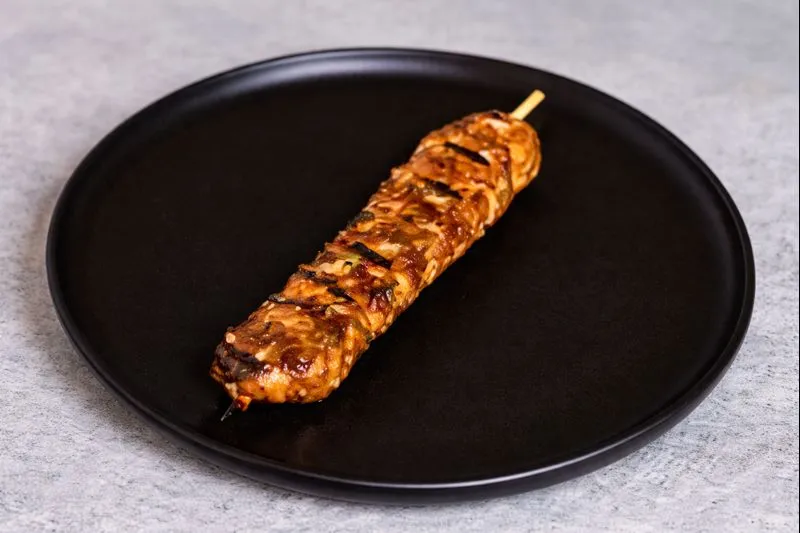
When cooking for a group, beef choice matters even more. Catering dishes need to hold quality over time, stay flavorful in chafing dishes, and work across different dietary preferences.
When We Use Ground Chuck for Catering
Ground chuck is the better option when the beef itself needs to stay structured and flavorful during service.
We typically choose ground chuck for:
- Shawarma-style beef trays and seasoned beef dishes
- Family-style plates where beef is the centerpiece
- Events where texture matters from the first serving to the last
Its consistent fat balance helps it stay moist without breaking down, which is why it works well in protein-forward catering menus like our Mediterranean catering offerings.
When Ground Beef Makes More Sense for Catering
Regular ground beef works best when beef is combined with other ingredients and needs to stay juicy over longer service windows.
We use ground beef for:
- Mixed dishes paired with grains or vegetables
- Large-volume trays designed for flexibility
- Menus built around variety rather than a single protein
In these cases, ground beef supports efficient preparation and consistent results, especially in customizable catering spreads like family meals and shared platters.
Choosing the Right Beef for Your Event
| Event Type | Best Choice | Why |
|---|---|---|
| Corporate lunches | Ground beef | Flexible, crowd-friendly |
| Family gatherings | Ground chuck | Holds texture and flavor |
| Large parties | Ground beef | Cost-effective and versatile |
| Protein-focused menus | Ground chuck | Strong structure and taste |
If you’re planning an event and want help choosing the right mix of proteins, our team can guide you through options that balance flavor, portion size, and service style.
Explore our full Mediterranean catering menu or build a spread that fits your event, whether you’re hosting a small gathering or feeding a large group.
Nutrition — Ground Chuck vs Ground Beef
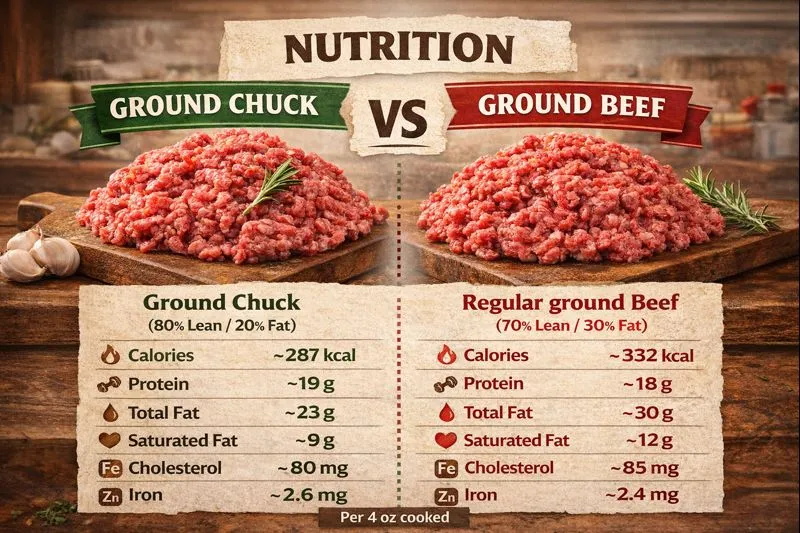
While flavor and cooking performance often drive the choice between ground chuck and regular ground beef, nutrition plays an important role as well. The main nutritional differences come down to fat percentage, which affects calories, protein concentration, and how filling each option feels.
For diners who prefer lighter or plant-forward meals, Mediterranean cooking also offers alternatives that rely less on beef altogether. Our guide to the vegetarian Mediterranean diet explains how legumes, grains, and vegetables can deliver the same sense of balance without relying on meat.
Nutrition of Ground Chuck (80% Lean / 20% Fat)
Ground chuck offers a balance between protein and fat, which contributes to its stronger beef flavor and firmer texture after cooking.
Ground Chuck Nutrition (Per 4 oz cooked)
| Nutrient | Amount |
|---|---|
| Calories | ~287 kcal |
| Protein | ~19 g |
| Total Fat | ~23 g |
| Saturated Fat | ~9 g |
| Cholesterol | ~80 mg |
| Iron | ~2.6 mg |
| Zinc | ~4.4 mg |
Nutrition takeaway:
Ground chuck provides solid protein with higher fat and saturated fat, which supports flavor but increases calorie density.
Nutrition of Regular Ground Beef (70% Lean / 30% Fat)
Regular ground beef contains more fat due to added beef fat and mixed trimmings, resulting in higher juiciness and calories.
Regular Ground Beef Nutrition (Per 4 oz cooked)
| Nutrient | Amount |
|---|---|
| Calories | ~332 kcal |
| Protein | ~18 g |
| Total Fat | ~30 g |
| Saturated Fat | ~12 g |
| Cholesterol | ~85 mg |
| Iron | ~2.4 mg |
| Zinc | ~4.0 mg |
Nutrition takeaway:
Regular ground beef is more calorie-dense and juicier but slightly lower in protein per serving.
Ground Chuck vs Ground Beef: Nutrition Comparison
| Nutrition Factor | Ground Chuck (80/20) | Regular Ground Beef (70/30) |
|---|---|---|
| Calories | Lower | Higher |
| Protein | Slightly higher | Slightly lower |
| Total Fat | Moderate | High |
| Saturated Fat | High | Higher |
| Juiciness After Cooking | Moderate | High |
| Flavor Intensity | Strong, beef-forward | Rich but milder |
| Best Nutrition Fit | Balanced meals, portion control | Occasional indulgence |
Ground chuck offers a better protein-to-fat balance, while regular ground beef prioritizes juiciness and richness. From a nutrition standpoint, neither is “bad” — the better choice depends on portion size, cooking method, and how often it’s eaten.
How Ground Chuck Compares to Other Beef Cuts?
People often see similar terms and assume they’re interchangeable. They’re not.
- Chuck vs sirloin: Sirloin is leaner and firmer; chuck brings more richness
- Chuck roast vs ground beef: Chuck roast is a whole cut; grinding changes how fat spreads and cooks
- Steak vs ground beef: Steaks rely on slicing and resting; ground beef relies on fat distribution
- Angus vs ground beef: Angus refers to cattle breed, not fat level or grind
- Beef arm roast vs chuck roast: Both come from the shoulder, but texture and fat differ
Knowing this prevents buying the wrong meat for the job.
Common Mistakes People Make With Ground Chuck
Ground chuck is forgiving, but it still gets misused.
- Overcooking it
Ground chuck has enough fat to stay juicy, but pushing it too far dries it out and dulls the flavor. - Pressing burgers while cooking
This squeezes out the fat that keeps ground chuck moist. You lose juiciness fast. - Over-seasoning
Chuck already has strong beef flavor. Heavy seasoning masks what you’re paying for. - Assuming all chuck is the same
Even ground chuck can vary slightly. Checking the fat ratio matters if you want consistent results.
Common Mistakes People Make With Ground Beef
Ground beef causes more issues because people expect it to behave like chuck.
- Using very lean ground beef for burgers
Lean blends cook fast and lose moisture quickly, which leads to dry, crumbly patties. - Assuming fat percentage tells the whole story
Two 85/15 blends can cook differently depending on the cuts used. - Overhandling the meat
Leaner ground beef breaks down easily. Too much mixing leads to a tight, tough texture. - Cooking it the same way every time
Ground beef needs different heat control depending on the blend. High heat works for fattier mixes, not lean ones.
How We Think About Beef in Mediterranean Cooking
In Mediterranean kitchens, beef isn’t treated as filler — it’s treated with purpose. We choose cuts and grinds based on how they cook, how they absorb seasoning, and how they balance with vegetables, grains, and sauces.
This approach reflects what defines Mediterranean food as a whole — balance, restraint, and intention. Beef is paired with grains, vegetables, and sauces like tahini, not buried under them. That same thinking applies whether the plate includes beef, chicken, or plant-based staples.
When we work with beef, we look for:
- Fat that supports flavor, not excess grease
- Texture that holds under heat, especially for grilling
- Clean beef taste that works with garlic, herbs, and spice blends
That’s why ground chuck often fits better when beef needs to stand on its own, while ground beef works when it’s part of a larger mix. The goal is always the same: satisfying protein that doesn’t overpower the plate.
This is the same reasoning behind shawarma-style cooking, where seasoning, heat, and fat balance matter as much as the cut itself. If you’ve ever compared shawarma vs gyro or shawarma vs kebab, you’ve seen how preparation and fat content shape the final result.
Frequently Asked Questions: Ground Chuck vs Ground Beef
1. Is ground chuck the same as ground beef?
No. Ground chuck comes from a single cut of beef, while ground beef can be a blend of multiple cuts.
2. What is ground chuck made from?
Ground chuck is made from the chuck section of the cow, located near the shoulder.
3. What’s the main difference between ground chuck and ground beef?
Ground chuck is more consistent in fat and texture; ground beef varies depending on the blend.
4. Is ground chuck better than ground beef?
It depends on the use. Ground chuck performs better for burgers and grilling, while ground beef works well in mixed dishes.
5. Which is better for burgers: ground chuck or ground beef?
Ground chuck is usually better because it holds moisture and shape more reliably.
6. Does ground chuck have more fat than ground beef?
Not always, but ground chuck typically sits around an 80/20 ratio, while ground beef can range from very lean to high fat.
7. Is ground chuck healthier than ground beef?
Neither is inherently healthier. Nutrition depends on fat percentage and portion size.
8. Can you substitute ground chuck for ground beef?
Yes, but results may differ. Ground chuck produces a firmer, juicier texture.
9. Can you substitute ground beef for ground chuck?
Yes, but lean ground beef may cook drier if not handled carefully.
10. What is ground beef chuck?
It usually refers to ground beef that includes chuck, but it may still contain other cuts.
11. Is ground chuck always 80/20?
Most ground chuck is close to 80/20, but it can vary slightly by butcher.
12. Why does ground chuck stay juicier?
Its fat is evenly distributed from a single cut, which helps retain moisture during cooking.
13. What’s the best meat for meatloaf?
Both can work, but ground beef blends are often preferred for softer texture.
14. Is lean ground beef bad for burgers?
It’s not bad, but it requires careful cooking to avoid dryness.
15. Does ground beef taste different from ground chuck?
Yes. Ground chuck has a richer, beefier flavor because of its cut source and fat balance.
16. Is ground chuck good for grilling?
Yes. It holds together well and browns evenly on the grill.
17. What’s better for Mediterranean-style beef dishes?
Ground chuck works well when beef is the main protein, while ground beef fits lighter, mixed dishes.
18. Should I choose based on price or cut?
Cut matters more than price if texture and cooking results are important.
Ready to Taste the Difference?
Understanding beef is one thing — tasting how it’s prepared the right way is another.
At Micheline’s Pita House, we apply the same decision logic you just read about when choosing proteins for our menu. From seasoned, grilled beef to balanced Mediterranean plates, every choice is made with texture, flavor, and balance in mind.
If you’re deciding what to try next:
- Explore our Chicken Shawarma for a lighter, herb-forward option
- Go richer with our Ribeye Steak Shawarma
- Pair your meal with Classic Hummus, Baba Gannoush or a fresh Greek Salad for balance
Whether you’re dining in, ordering delivery, or planning catering, our goal stays the same — food that tastes right because it’s chosen and cooked with intention.
Visit any of our San Diego locations or order through Mediterranean delivery to experience how thoughtful ingredient choices change the meal.