I hear this question all the time, from guests exploring Mediterranean food for the first time, from travelers who fell in love with Greece, and from people simply curious about how all these cuisines fit together. And honestly, I love answering it, because it lets me share something beautifully simple:
Greek culture is Mediterranean. Greek cuisine is Mediterranean. And Greek people are Mediterranean.
But… Greek isn’t the only Mediterranean. It’s one vibrant part of a much larger, diverse family of cultures, including the flavors we share every day at Micheline’s Pita House.
Before we dive deeper into geography, cuisine, and culture, here’s the clearest possible explanation.
Yes, Greece is a Mediterranean country, both geographically and culturally. It borders the Mediterranean Sea, shares the region’s climate and ingredients, and its cuisine forms a core part of the broader Mediterranean food tradition. Greek food is a type of Mediterranean cuisine, with its own distinct flavors and dishes.
Greece’s Place in the Mediterranean Region
To understand why Greece is considered Mediterranean, it helps to picture where it sits on the map and how deeply its culture has shaped the region. Whenever guests ask me if Greek is Mediterranean, I start with geography, because it makes everything immediately clear.
Greece in the Mediterranean: Geography Made Simple
Greece is located in Southern Europe with coastlines on three major bodies of water:
• The Aegean Sea • The Ionian Sea • The Mediterranean Sea
Because of this location, Greece has the climate, agriculture, and coastal lifestyle that define Mediterranean countries. Sun, sea, olive trees, vineyards, fresh vegetables and a food culture built around simplicity and freshness. Greece fits this picture perfectly.
A Mediterranean Culture Through History
Beyond geography, Greece has been at the heart of Mediterranean history for thousands of years. Ancient Greek civilization shaped art, philosophy, trade, and food traditions across the region. Greek people are considered Mediterranean Europeans in the same way that Italians, Spaniards, and Southern French people are.
Why This Matters for Understanding Greek Food?
Greek cuisine developed from the same landscape and agricultural traditions as the rest of the Mediterranean. Olive oil, herbs, grains, vegetables, seafood and grilled meats. These ingredients appear across the region, and they are the foundation of what many people think of as Mediterranean eating.
This is why Greek flavors feel familiar to anyone who loves Mediterranean food. It is all connected by geography, climate and culture.
Is Greek Cuisine Mediterranean Cuisine?
Whenever people ask me if Greek food is Mediterranean food, I always smile because the answer is both simple and meaningful. Yes, Greek cuisine is absolutely part of Mediterranean cuisine. It reflects the same coastal climate, farming traditions, and love for fresh, honest ingredients that shape the entire Mediterranean region.
At the same time, Greek cuisine has its own unique identity within the Mediterranean family, just like Lebanese, Italian, Moroccan or Turkish cuisines do.
How Greek Food Fits Into the Mediterranean Family?
Greek cuisine shares the essential ingredients that define Mediterranean eating.
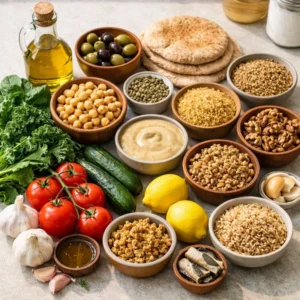
• Olive oil • Fresh vegetables such as tomatoes, cucumbers, peppers and greens • Legumes such as chickpeas and lentils • Herbs including oregano, mint and dill • Grilled meats and seafood • Yogurt based sauces
These ingredients appear across the region, and they are just as familiar in Greece as they are in the Eastern Mediterranean dishes we prepare at Micheline’s Pita House.
A perfect example is the Greek Salad, which we serve often. It is crisp, bright and refreshing with tomatoes, cucumbers, peppers, olives and feta. It is unmistakably Greek but also instantly recognizable as Mediterranean.
Greek Food Has Its Own Character
Even within the larger Mediterranean tradition, Greek food has flavors and dishes that belong uniquely to Greece.
For example • Tzatziki • Moussaka • Souvlaki • Greek village salads • Lemon and herb roasted meats
These dishes sit comfortably alongside other Mediterranean favorites but still carry their own Greek fingerprints.
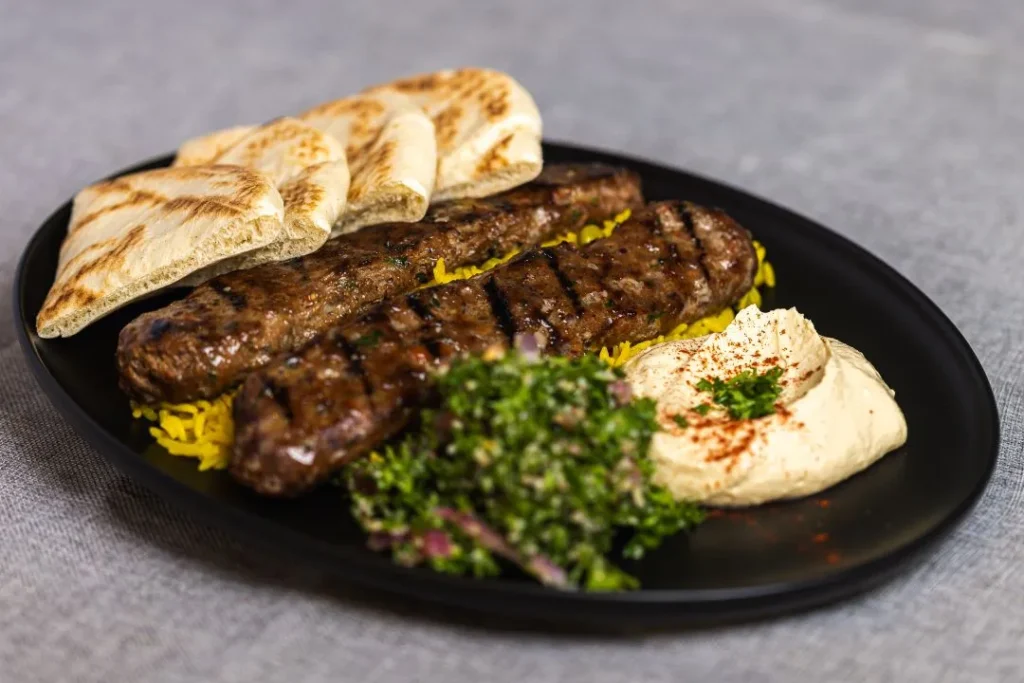
At Pita House, you will find Mediterranean dishes from the Eastern Mediterranean and Levant such as Chicken Shawarma, Falafel, classic hummus and tabouli. These flavors are cousins to Greek cuisine. Similar in spirit, different in details. That is the beauty of the Mediterranean. Everything is connected, yet each region keeps its own voice.
Greek Food vs Mediterranean Food Explained
People often use the words Greek and Mediterranean as if they mean the same thing, especially when talking about food. And I understand why. There is overlap, the ingredients feel familiar, and the flavors live in the same sunny part of the world. But they are not identical.
The easiest way to understand the difference is this.
Greek food is one type of Mediterranean food. Mediterranean food is the larger region that includes Greek cuisine along with many others.
Think of Mediterranean cuisine as a beautiful collection of cultures and flavors. Greece is an important and influential part of that collection, but not the whole picture.
What Makes Greek Food Distinct?
Greek cuisine has its own traditions, ingredients and flavor patterns.
Some examples • Use of oregano, mint and dill • Generous amounts of olive oil • Yogurt and cucumber based sauces such as tzatziki • Feta cheese • Lemon forward marinades • Grilled meats and seafood • Dishes such as Greek Salad, souvlaki and moussaka
These dishes are unmistakably Greek.
What Makes Mediterranean Food Broader
Mediterranean cuisine includes dishes from many countries, including
These dishes are Mediterranean but not Greek. They come from the Levant, a different but connected part of the region.
Greek Restaurants vs Mediterranean Restaurants
This is another common source of confusion.
A Greek restaurant focuses on Greek dishes and Greek flavors. A Mediterranean restaurant may include Greek dishes but usually features foods from multiple Mediterranean cultures.
That is why you might see Greek Salad at a Mediterranean restaurant but also find shawarma, falafel and mezze from other regions. They are all related, but they do not come from the same country.
The Helpful Way to Remember It
Greek is Mediterranean. Mediterranean is not only Greek.
Simple. Clear. And true.
Greek Food in the Context of Modern Mediterranean Restaurants
One of the reasons people mix up Greek and Mediterranean food is because many Mediterranean restaurants serve dishes that feel Greek, Levantine or Turkish all on the same menu. And depending on where you grew up or what kind of Mediterranean food you first tried, your sense of the cuisine might be shaped by one country more than another.
In reality, modern Mediterranean restaurants often bring together dishes from different parts of the region. This makes the cuisine feel familiar and accessible, even if the dishes have different origins.
Why Greek Dishes Appear in Mediterranean Restaurants?
Greek food fits naturally into Mediterranean menus because it shares the same foundation as other Mediterranean cuisines.
A dish like Greek Salad is a perfect example. It feels at home beside Eastern Mediterranean favorites such as Falafel, hummus, or Chicken Shawarma because the ingredients are part of the same regional pantry.
Why Mediterranean Menus Feel Familiar Across Cultures?
When you combine olive oil-based dressings, roasted meats, lemon, herbs, and vegetables, you create a flavor profile that feels unmistakably Mediterranean, regardless of which country the dish comes from. This shared identity is why Mediterranean food feels consistent even when it draws from many cultures.
In other words Greek food belongs in the Mediterranean family, and Mediterranean restaurants often celebrate multiple members of that family on a single menu.
Mediterranean Food in San Diego — A Local Perspective
Living and cooking in San Diego has shown me something wonderful about Mediterranean cuisine. People here truly appreciate fresh ingredients, bright flavors, and meals that feel both healthy and comforting. That is exactly what Mediterranean food offers, and it is why the cuisine continues to grow across the city.
When guests ask us whether Greek food is Mediterranean or whether Mediterranean restaurants include Greek dishes, they are usually trying to understand the menus they see around San Diego. And honestly, their confusion makes sense. Mediterranean restaurants here often pull inspiration from Greece, Lebanon, Turkey, Palestine, Syria, Italy and more.
At Micheline’s Pita House, we focus on the Eastern Mediterranean side, serving dishes such as • Chicken Shawarma • Ribeye Steak Shawarma • Falafel • Shawarma Tabouli Salad • Hummus • Fresh salads and mezze
These dishes are Mediterranean but not Greek. Yet they share the same approach to food that Greek cuisine celebrates: real ingredients, balanced flavors, fresh herbs, lemon, garlic, olive oil and a deep respect for timeless recipes.
This is why San Diego diners who love Greek food often love our menu as well. The spirit of the cuisine is the same even when the dishes come from different Mediterranean regions.
Mediterranean food in San Diego is diverse, welcoming and full of flavor. Greek cuisine is part of that story, and the rest of the Mediterranean fills in the rest of the beautiful picture.
Is Greek Food Mediterranean FAQs:
Is Greece considered Mediterranean?
Yes. Greece is a Mediterranean country geographically and culturally. It borders the Mediterranean Sea and shares the climate, history and food traditions that define the Mediterranean region.
Are Greek and Mediterranean the same thing?
Not exactly. Greek is one country and one cuisine within the Mediterranean. Mediterranean refers to a larger region that includes Greece as well as Italy, Spain, Lebanon, Turkey, Palestine, Syria, Morocco and others.
Is Greek food Mediterranean food?
Yes. Greek food is a type of Mediterranean cuisine. It shares the core ingredients of the region such as olive oil, vegetables, herbs, legumes, grains, and grilled meats.
Is Greek a Mediterranean ethnicity?
Yes. Greek people are considered Mediterranean Europeans, similar to Italians, Spaniards, Southern French and Portuguese. Mediterranean describes people from countries surrounding the Mediterranean Sea.
Who is considered Mediterranean?
Mediterranean peoples include those from Southern Europe, the Eastern Mediterranean and parts of North Africa. This includes Greece, Italy, Spain, Lebanon, Turkey, Palestine, Syria, Egypt, Morocco and Tunisia.
What is the difference between Greek and Mediterranean restaurants?
Greek restaurants focus mainly on Greek dishes. Mediterranean restaurants usually serve a wider range of foods from across the region. This can include Greek dishes like Greek Salad, along with Eastern Mediterranean dishes such as Chicken Shawarma, Falafel or hummus.
Why do many Mediterranean menus include Greek dishes?
Because Greek cuisine is part of the Mediterranean family. The ingredients and cooking style blend naturally with dishes from the Eastern Mediterranean and other neighboring regions.