Planning food for a group event can quickly become stressful. Whether it’s an office lunch, family gathering, corporate meeting, or private celebration, organizing meals for many guests often requires time, coordination, and careful preparation. Understanding what is catering can help simplify the process and make hosting much easier.
Catering is the professional service of preparing and providing food, beverages, and dining support for events such as corporate meetings, weddings, and private parties. It typically includes menu planning, cooking, delivery, and sometimes setup, allowing guests to enjoy restaurant-quality meals at locations outside the restaurant.
Instead of cooking or coordinating multiple food orders, catering allows hosts to focus on their guests while the meal is prepared and delivered professionally.
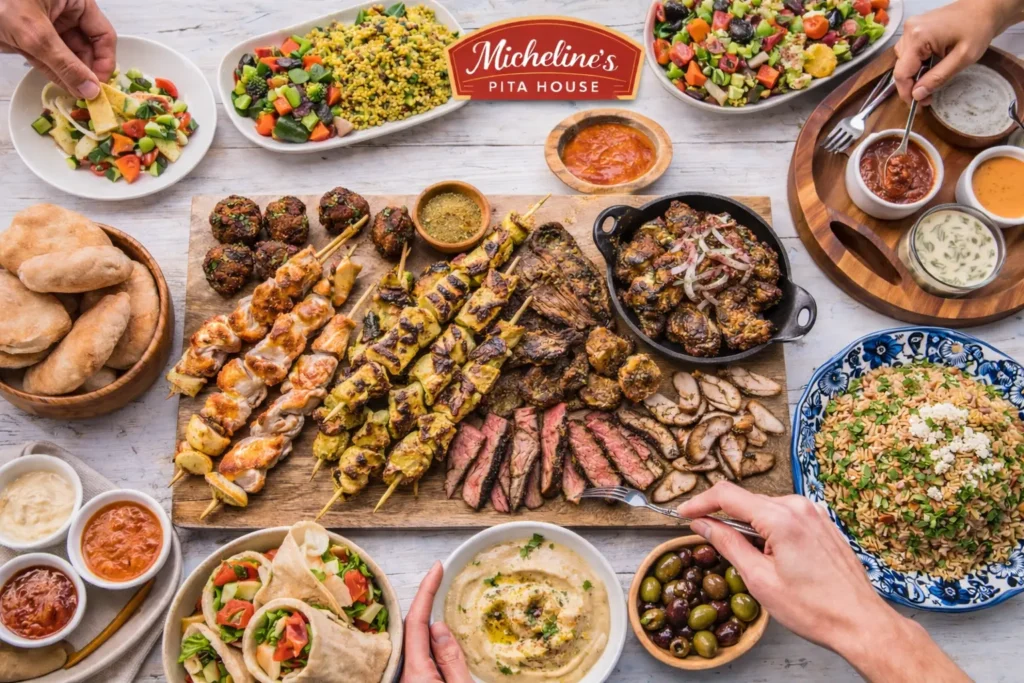
At Micheline’s Pita House, Mediterranean catering offers a convenient solution for group meals. From pita and wrap boxes to grilled proteins, fresh salads, dips, and family-style trays, the catering menu makes it simple to serve fresh Mediterranean food for meetings, celebrations, and events of any size.
What Is Catering?
Catering is the preparation and service of food for a group at an event, meeting, or gathering. It can include pickup, delivery, setup, and sometimes on-site service, depending on the order and the type of event.
That is the simplest catering definition.
In everyday use, catering meaning usually refers to food prepared for more than one person outside a standard dine-in meal. It is commonly used for office lunches, birthdays, family gatherings, business meetings, school events, and private parties.
So, if someone asks “what does catering mean?”, the practical answer is this: it means ordering food in a way that is designed for groups.
What Does Catering Mean in Restaurants?
In restaurants, catering means preparing menu items in portions and formats that work well for groups rather than individual dine-in orders.
That can include:
-
boxed meals
-
wrap trays
-
pita trays
-
proteins by the tray
-
salads for sharing
-
dips and sauces
-
desserts and drinks
Restaurant catering is useful because it combines the flavor and quality of a restaurant meal with the convenience needed for events and larger gatherings. Instead of cooking for a crowd, hosts can order food that is already planned for sharing, serving, and group convenience.
How Micheline’s Pita House Helps
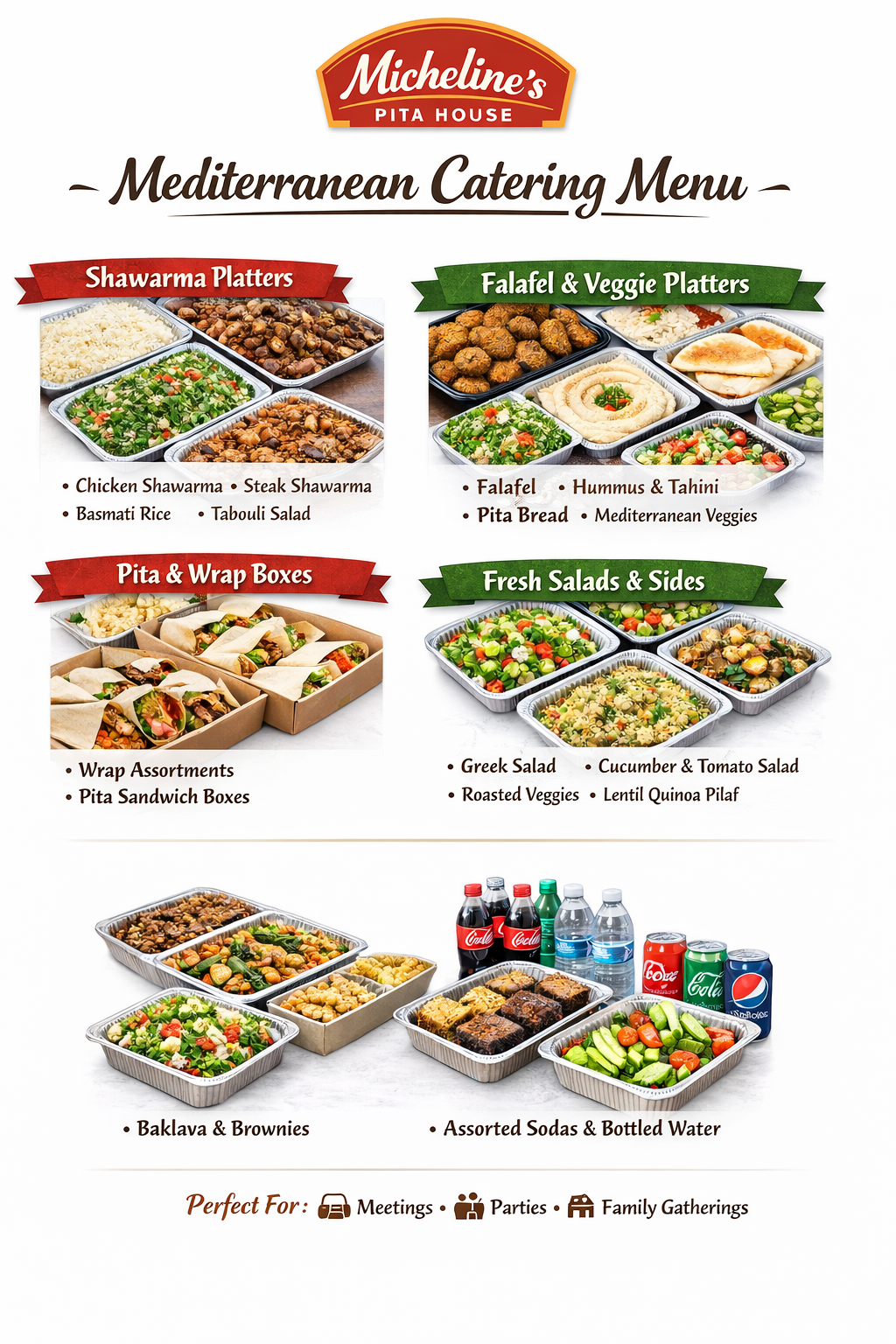
Micheline’s Pita House mediterranean restaurant helps by turning the idea of catering into something practical and easy to order.
That means customers can choose from Mediterranean dishes that work well for groups, such as:
This gives customers a simple way to feed a group with fresh Middle Eastern dishes, pita bread, tahini, garlic sauce, salads, grains, and shareable sides.
What Is a Caterer?
A caterer is a person, restaurant, or company that prepares food for events and group gatherings.
In simple terms, if catering is the service, the caterer is the one providing it.
A caterer may handle:
-
menu planning
-
food preparation
-
packaging
-
delivery
-
setup
-
serving
-
cleanup in some cases
For restaurant catering, the restaurant itself often acts as the caterer. That means the same kitchen that prepares daily menu items can also prepare larger group orders for offices, parties, and events.
What Do Catering Services Usually Include?
Catering services can vary depending on the event and the restaurant, but they usually include some combination of the following:
-
food preparation for a group
-
menu selection based on the event
-
packaging for pickup or delivery
-
group-friendly portions
-
serving trays, boxes, or platters
-
optional setup or service, depending on the catering style
Some catering services are very simple. For example, a customer may order a few trays and pick them up. Other catering arrangements are more complete and may include delivery timing, buffet setup, service support, or a full event meal structure.
For many restaurant customers, the most important part is not the formal label. It is whether the food is easy to order, easy to serve, and suitable for the size and style of the event.
That is one reason restaurant catering is so popular. It keeps group dining convenient while still offering fresh food and menu variety.
What Is Catered Food?
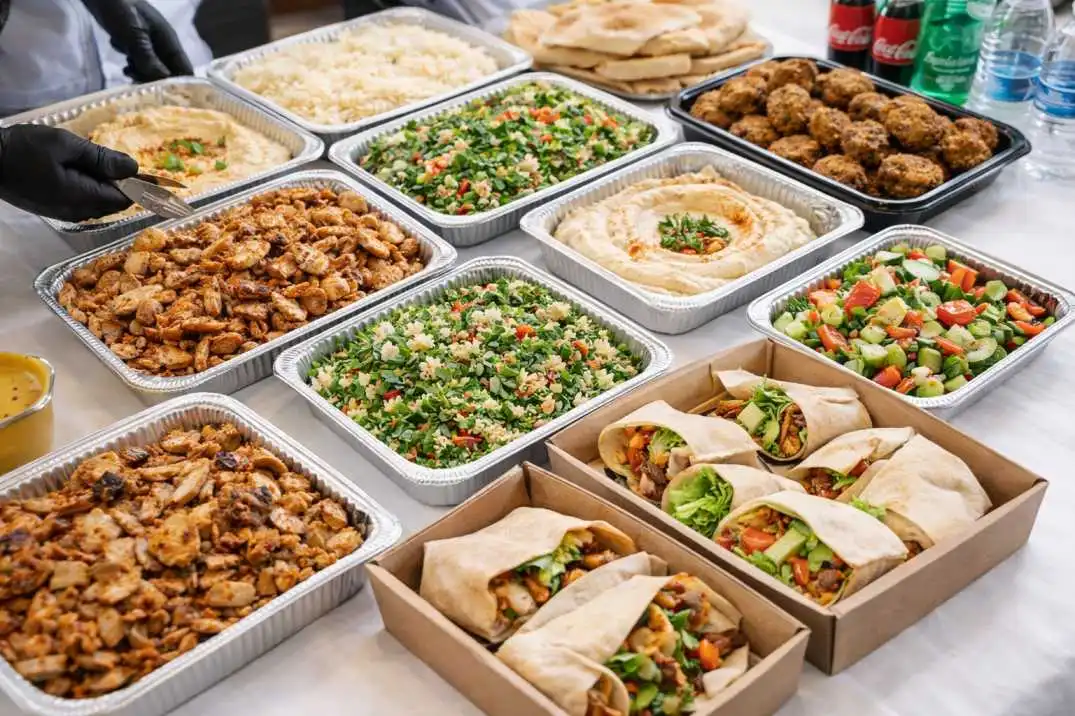
Catered food is food prepared specifically for a group order rather than a single plated meal.
It is usually packaged in a way that makes serving easier for events, meetings, and gatherings. That might mean trays, boxed meals, platters, side containers, dessert portions, or beverages added to the order.
Catered food often includes:
-
proteins for sharing
-
breads and wraps
-
appetizers and dips
-
salads and sides
-
desserts
-
drinks
For a Mediterranean restaurant, catered food may include grilled meats, falafel, hummus, baba gannoush, pita bread, rice, tabouli, roasted vegetables, tahini, tzatziki, and garlic sauce.
At Micheline’s Pita House, catered food can be built around a mix of shareable items and complete group meals. For example, a customer might pair chicken shawarma with basmati rice, tabouli, and tahini for a balanced spread. Another group may prefer wrap box small or combo meal for easier individual serving.
Types of Catering Services
Not all catering works the same way. The right option depends on the type of event, the number of guests, the level of service needed, and how the food will be served.
Here are the main types of catering services people usually mean when they talk about catering.
Corporate Catering
Corporate catering is used for business-related events.
This can include:
-
office lunches
-
staff meetings
-
training sessions
-
team celebrations
-
conferences
-
client meetings
The goal is usually convenience, reliability, and food that is easy to serve to a group. In many business settings, customers want meals that arrive on time, travel well, and offer enough variety for different preferences.
That makes Mediterranean catering a strong fit for office events. A mix of proteins, pita, wraps, salads, grains, dips, and sauces can serve different tastes without making the meal feel too heavy.
Wedding Catering
Wedding catering is designed for larger celebrations and usually involves more planning.
It can range from formal plated meals to buffet-style service or shared platters, depending on the wedding style and guest count. The food also needs to match the event tone, schedule, and guest expectations.
While some weddings need large full-service catering operations, others benefit from simpler restaurant-supported catering for smaller events such as:
-
engagement parties
-
rehearsal meals
-
bridal gatherings
-
post-event family meals
For these types of celebrations, restaurant catering can offer a more relaxed and food-focused option with fresh, familiar dishes.
Party and Social Event Catering
Party catering covers many casual and social occasions, including:
-
birthdays
-
graduations
-
anniversaries
-
baby showers
-
holiday gatherings
-
community events
This type of catering often works best when the food is easy to share. Guests may be eating while talking, moving around, or serving themselves, so platters, wraps, pita sandwiches, dips, salads, and side dishes are especially practical.
Mediterranean cuisine works well here because it naturally offers variety. A table can include grilled proteins, falafel, hummus, pita bread, tahini, garlic sauce, Greek salad, tabouli, fries, roasted vegetables, and dessert without feeling repetitive.
For social events, customers can explore Mediterranean-friendly options through Mediterranean catering.
Restaurant Catering
Restaurant catering is one of the most common and convenient forms of catering today. Instead of hiring a dedicated catering company, customers order larger portions of restaurant menu items that are packaged for groups and events.
This option is popular because it combines the flavor and quality of restaurant food with the practicality needed for serving multiple people. Restaurants already have experienced kitchens, established menus, and reliable food preparation systems, making them well-suited for catering orders.
Restaurant catering typically includes options such as:
-
group meal trays
-
boxed lunches
-
wrap or sandwich boxes
-
shareable appetizers and dips
-
salads and sides
-
desserts and beverages
For many events, restaurant catering is the easiest solution because it removes the need for cooking, planning a full menu, or coordinating complicated service logistics.
How Micheline’s Pita House Makes Restaurant Catering Easy
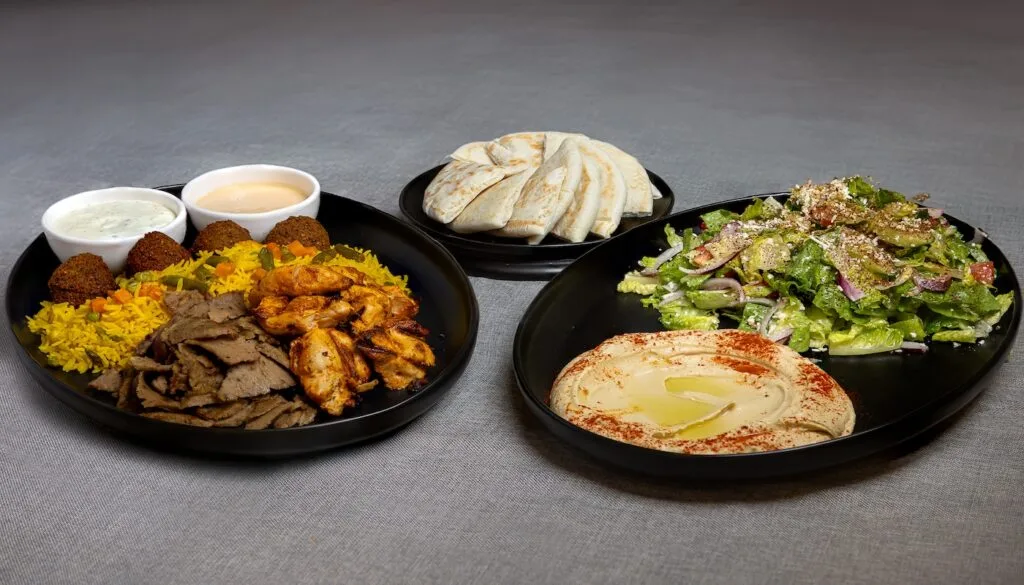
Micheline’s Pita House specializes in Mediterranean flavors that are naturally well-suited for group meals. Many of the menu items can be combined into flexible spreads that allow guests to build their own plates.
Customers can combine proteins, pita bread, grains, sauces, and sides to create meals that fit different group sizes and tastes.
For a full overview of available options, visitors can explore the main catering menu.
Off-Premise Catering
Off-premise catering refers to food that is prepared in one location and served somewhere else.
In most cases, this means the food is prepared in a restaurant kitchen and then transported to an event location such as:
-
offices
-
homes
-
schools
-
conference spaces
-
event venues
This type of catering is very common because it allows people to enjoy restaurant-quality food without having to host the event at the restaurant itself.
Restaurant catering is often a form of off-premise catering because the kitchen prepares the food and customers pick it up or have it delivered to their event location.
How Restaurant Catering Works
Ordering catering from a restaurant is usually much simpler than people expect. The process typically involves just a few steps.
1. Choose Food That Works for Groups
The first step is selecting menu items that can be served easily to multiple people. This often includes shareable foods such as:
-
grilled proteins
-
wraps or pita sandwiches
-
rice or grain dishes
-
salads
-
dips and sauces
-
desserts
Mediterranean cuisine works especially well for group meals because it naturally includes a mix of proteins, vegetables, grains, and breads.
2. Plan Portions for the Event
The next step is estimating how much food the group will need. The amount depends on factors such as:
-
number of guests
-
time of day
-
whether the event is a full meal or a snack
-
dietary preferences
Some groups prefer shared platters, while others choose individual boxed meals or wrap boxes.
3. Place the Catering Order
After selecting the menu items and confirming portions, customers place the order through the restaurant’s catering system.
Depending on the restaurant, the order may be available for:
-
pickup
-
delivery
-
scheduled event preparation
Restaurants often recommend ordering in advance for larger events so the kitchen can prepare everything fresh and on time.
4. Serve the Food
Once the food arrives, serving is typically simple. Most restaurant catering items come in trays, containers, or boxes that can be placed directly on tables for guests to serve themselves.
This makes restaurant catering ideal for events where convenience is important, such as meetings, celebrations, or family gatherings.
Popular Catering Foods for Events
Some foods are especially popular for catering because they travel well and can be served easily to groups.
Common catering foods include:
-
grilled meats and proteins
-
wraps and sandwiches
-
pita bread and flatbreads
-
salads and grain bowls
-
dips and spreads
-
roasted vegetables
-
desserts and beverages
Mediterranean cuisine fits naturally into this style of catering because it includes a variety of shareable dishes that can be mixed and matched.
At Micheline’s Pita House, customers often build group meals around combinations like:
-
shawarma with rice and salads
-
falafel with hummus and pita
-
kabobs with roasted vegetables
-
Mediterranean salads with wrap boxes
Sides such as Greek fries or lentil quinoa pilaf can add variety to larger group orders.
Catering for Different Types of Events
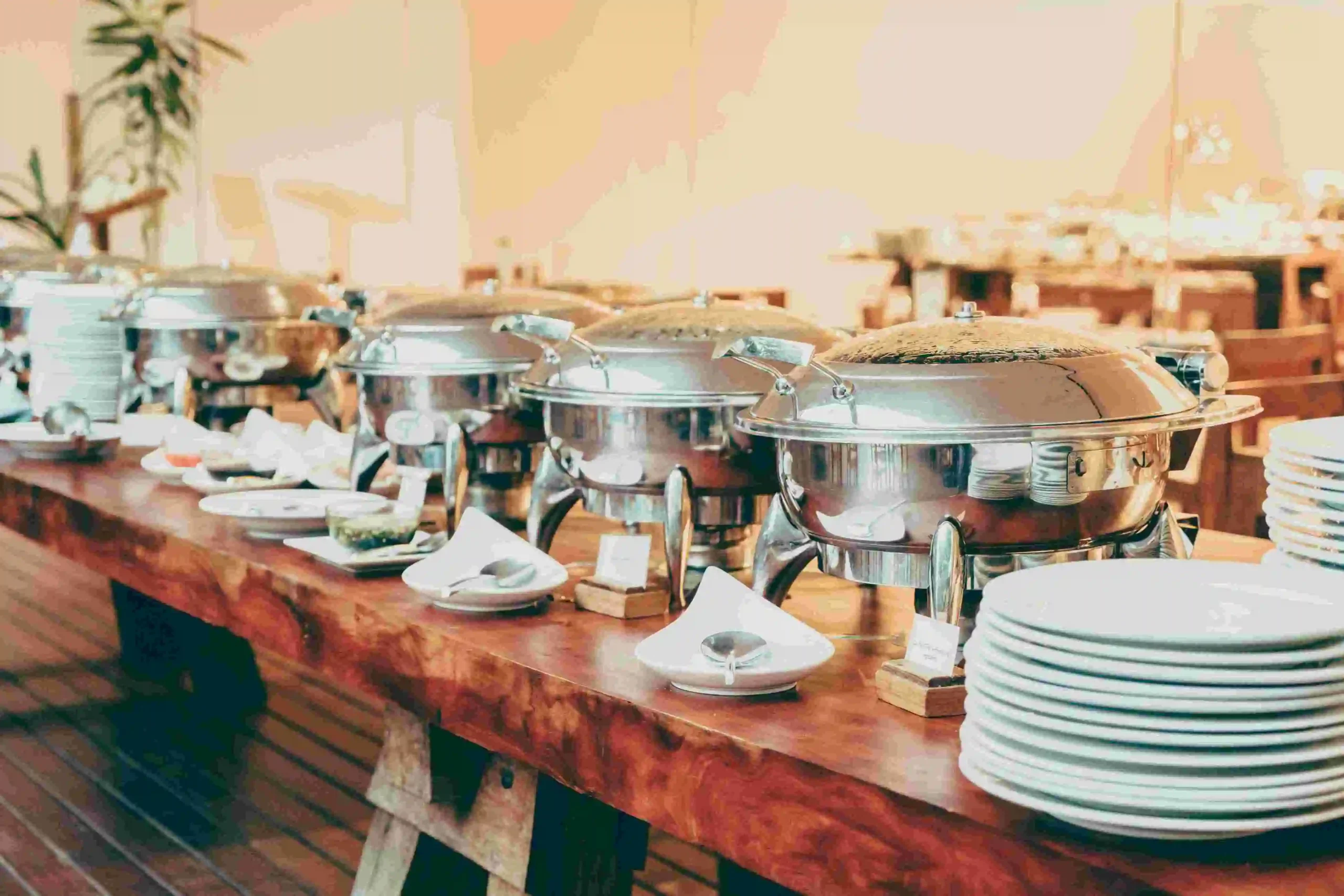
Catering works well for many types of gatherings, from professional meetings to family celebrations. The type of food and service often depends on the event style and guest expectations.
Office Catering
Office catering is one of the most common uses of restaurant catering.
Companies often order catering for:
-
staff lunches
-
training sessions
-
business meetings
-
client presentations
-
employee appreciation events
In these situations, food needs to be convenient, reliable, and easy to serve.
Options such as wrap boxes, pita boxes, and shareable platters are especially popular because they allow employees to eat quickly without interrupting the event schedule.
Mediterranean cuisine also offers lighter options compared to traditional heavy catering meals, making it a good fit for workday lunches.
Party Catering
Party catering focuses on making celebrations easier for hosts.
Instead of spending hours cooking or coordinating multiple dishes, hosts can order a variety of menu items designed for sharing.
For example, a birthday gathering might include:
-
falafel
-
shawarma
-
hummus
-
pita bread
-
Greek salad
-
roasted vegetables
-
dessert trays
Guests can mix and match their plates, creating a casual and interactive dining experience.
Family Gathering Catering
Family gatherings often involve large groups, which can make cooking at home challenging.
Restaurant catering simplifies these meals by providing complete dishes ready to serve.
Options like family meal large or family meal small are designed specifically for shared dining, making them ideal for holidays, reunions, and weekend gatherings.
Business Meeting Catering
For business meetings, food should be simple, organized, and easy to serve without creating distractions.
Common choices include:
-
boxed lunches
-
wrap boxes
-
salads
-
dips and pita
-
beverages
Mediterranean catering works well here because it provides balanced meals that are satisfying but not overly heavy during work hours.
Catering vs Takeout vs Delivery

Many people confuse catering, takeout, and delivery, but they serve different purposes. Understanding the difference helps customers choose the right option for their event or group meal.
- Catering is designed specifically for groups. The food is prepared in portions that can feed multiple people and is often packaged in trays, boxes, or platters that make serving easier.
- Takeout usually refers to ordering individual meals from a restaurant and picking them up yourself. The portions are typically designed for one person.
- Delivery is similar to takeout, but the restaurant or a delivery service brings the food to your location. Like takeout, it is usually intended for individual meals rather than group events.
Here is a simple comparison:
| Service | Best For | Typical Format |
|---|---|---|
| Catering | Events, meetings, parties | Trays, platters, boxed meals |
| Takeout | Individual meals | Single meal orders |
| Delivery | Individual meals delivered | Single meal orders delivered |
If you are feeding a group of people, catering is usually the best choice because it is designed for sharing and serving multiple guests.
How to Choose the Right Caterer
Choosing the right caterer can make a big difference in the success of an event. Whether the gathering is professional or social, the goal is to provide food that is convenient, reliable, and enjoyable for guests.
Here are a few things to consider when selecting a catering provider.
Menu Variety
A good caterer should offer a menu that accommodates different tastes and dietary preferences. Group meals often include guests with different preferences, so having multiple protein, vegetable, and side options can help ensure everyone finds something they enjoy.
Mediterranean cuisine is especially helpful here because it naturally includes a range of dishes such as grilled meats, falafel, hummus, salads, grains, and sauces.
Food Quality
Fresh ingredients and consistent preparation are essential for any catering service. Guests often remember the food long after an event, so choosing a restaurant known for quality can make a positive impression.
Portion Options
A strong catering menu should allow customers to order the right amount of food for their event. That may include trays, family-style meals, boxed lunches, or customizable combinations of dishes.
Reliability
Events often run on tight schedules. Choosing a restaurant that prepares orders on time and packages food properly can help prevent last-minute stress for hosts and organizers.
Restaurants with established kitchens and experienced staff are often well equipped to handle catering orders because they already prepare high volumes of food daily.
If you are planning a meeting, party, or family gathering, you can explore the fresh Mediterranean options available through the Micheline’s Pita House catering menu. Their catering selections include shawarma, falafel, pita and wrap boxes, salads, dips, and family-style meals that make serving groups simple and convenient.
Why Restaurants Offer Catering Services
Many restaurants expand into catering because it allows them to bring their menu beyond the dining room. Catering helps restaurants serve customers at offices, homes, and event venues while introducing their food to new audiences.
For customers, restaurant catering offers several advantages:
-
restaurant-quality food for events
-
familiar menu items guests already enjoy
-
convenient ordering and pickup options
-
flexible group meal combinations
For restaurants, catering also creates opportunities to serve larger groups and build relationships with local businesses and event planners.
Mediterranean restaurants, in particular, often adapt well to catering because their menus include foods that are easy to share and transport, such as grilled meats, wraps, salads, rice dishes, and dips.
Mediterranean Catering Ideas for Events
Mediterranean cuisine is a popular choice for catering because it offers a balance of flavors, colors, and textures. It also provides flexibility for different dietary preferences, including vegetarian options and lighter dishes.
Some Mediterranean catering combinations that work well for events include:
Shawarma and Rice Platters
Grilled or roasted shawarma served with rice and salads is a classic group meal option. Guests can build their own plates using proteins, grains, and sauces.
For example, a catering spread might include:
Falafel and Hummus Platters
Vegetarian-friendly spreads are another great option for group dining.
A simple setup may include:
This combination works well for office lunches or social gatherings because guests can easily build small plates.
Wrap and Pita Boxes
For meetings or events where individual meals are easier to manage, wrap or pita boxes can be ideal.
Options such as:
allow each guest to receive their own portion while still enjoying the restaurant’s signature flavors.
Mediterranean Salads and Sides
Side dishes help round out any catering order and add variety to the table.
Popular additions include:
These dishes complement grilled proteins and wraps while providing lighter options for guests.
Desserts and Beverages
Many catering orders also include simple desserts or drinks to complete the meal.
Options such as:
can help round out the catering spread and make serving easier for hosts.
How Micheline’s Pita House Helps With Mediterranean Catering
Micheline’s Pita House makes Mediterranean catering accessible for a wide range of events.
Customers can choose from a diverse selection of dishes that work well for group meals, including:
-
grilled meats and shawarma
-
vegetarian falafel
-
fresh salads and grains
-
pita bread and wraps
-
classic Mediterranean dips and sauces
-
desserts and beverages
This variety allows hosts to create flexible catering spreads that accommodate different tastes and dietary preferences.
For example, a typical catering setup might combine shawarma, falafel, hummus, salads, rice, and pita bread so guests can build their own plates.
Customers looking for lighter or balanced group meals can also explore the restaurant’s healthy catering ideas or browse options through the main Mediterranean catering page.