When people search for a Mediterranean diet food list, I know what they’re really asking:
“What should I actually be eating — and how does this work in real life?”
In our kitchen, the Mediterranean diet isn’t a trend, a reset, or a strict set of rules. It’s how food has always been cooked and shared — with vegetables at the center, olive oil as the backbone, grains and legumes for nourishment, and meals meant to be enjoyed together.
Here’s what makes this way of eating special:
- 👨👩👧👦 Meals are meant to be shared slowly with family and friends
- 🥗 Vegetables are the star of every meal, not the side dish
- 🫒 Extra virgin olive oil is the everyday fat — not a garnish
- 🥖 Grains and legumes provide steady nourishment
- 🐟 Fish, poultry, and eggs appear regularly, red meat occasionally
- 🍇 Fresh, seasonal fruit is the default sweet treat
This page isn’t written from a clinic or a lab. It’s written from a Mediterranean kitchen, where food is practical, satisfying, and deeply rooted in tradition — the same philosophy we follow every day at Micheline’s Pita House.
If you’re new to this way of eating, overwhelmed by long medical charts, or just want a clear Mediterranean foods list you can actually use, you’re in the right place.
What Is the Mediterranean Diet? (A Simple, Real-Food Explanation)
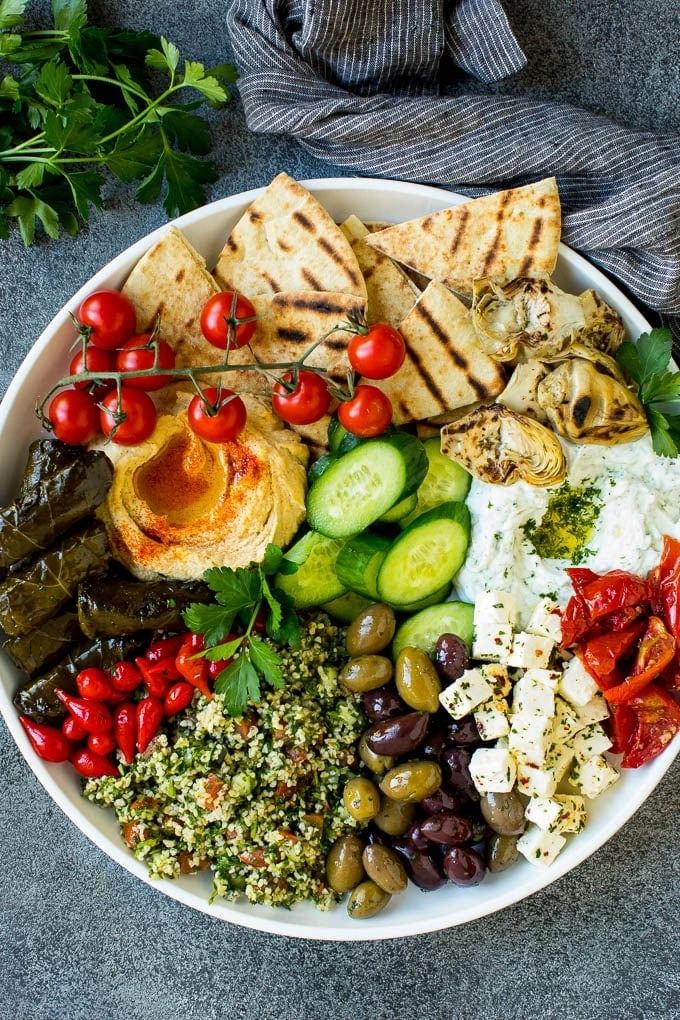
The Mediterranean diet is not a diet plan. It’s a traditional way of eating based on how families in Mediterranean regions have cooked for generations.
At its core, the Mediterranean diet means:
- Eating mostly plant foods
- Using extra virgin olive oil as the primary fat
- Enjoying fish, legumes, grains, and vegetables regularly
- Eating meat less often and in smaller portions
- Sharing meals slowly, with others, whenever possible
What makes this way of eating so sustainable is that it focuses on patterns, not perfection — something all major health organizations agree on, even if they explain it clinically.
Where the Mediterranean Diet Comes From?
This way of eating comes from everyday life in countries surrounding the Mediterranean Sea — places where meals were shaped by seasonal produce, local markets, and home cooking, not packaged food.
Food wasn’t engineered to be “low-fat” or “high-protein.”
It was cooked simply, with what was available:
- Vegetables harvested close to home
- Olive oil pressed locally
- Beans, lentils, and grains used daily
- Fish pulled from nearby waters
- Meals shared at the table — not rushed or eaten alone
That culture of cooking and sharing is just as important as the ingredients themselves.
How the Mediterranean Diet Is Different From Western Eating?
The biggest difference isn’t calories or math — it’s what shows up most often on the plate.
Mediterranean-style eating focuses on:
- Vegetables, fruits, legumes, and whole grains as the foundation
- Olive oil instead of butter or industrial oils
- Fish and plant proteins more often than red meat
Typical Western eating patterns rely more on:
- Refined grains and added sugars
- Large portions of meat as the centerpiece
- Highly processed convenience foods
There’s no shaming here — just a shift in emphasis.
The Mediterranean approach builds meals around foods that nourish and satisfy, without feeling restrictive.
Mediterranean Diet Food List – The Core Foods We Rely On Every Day
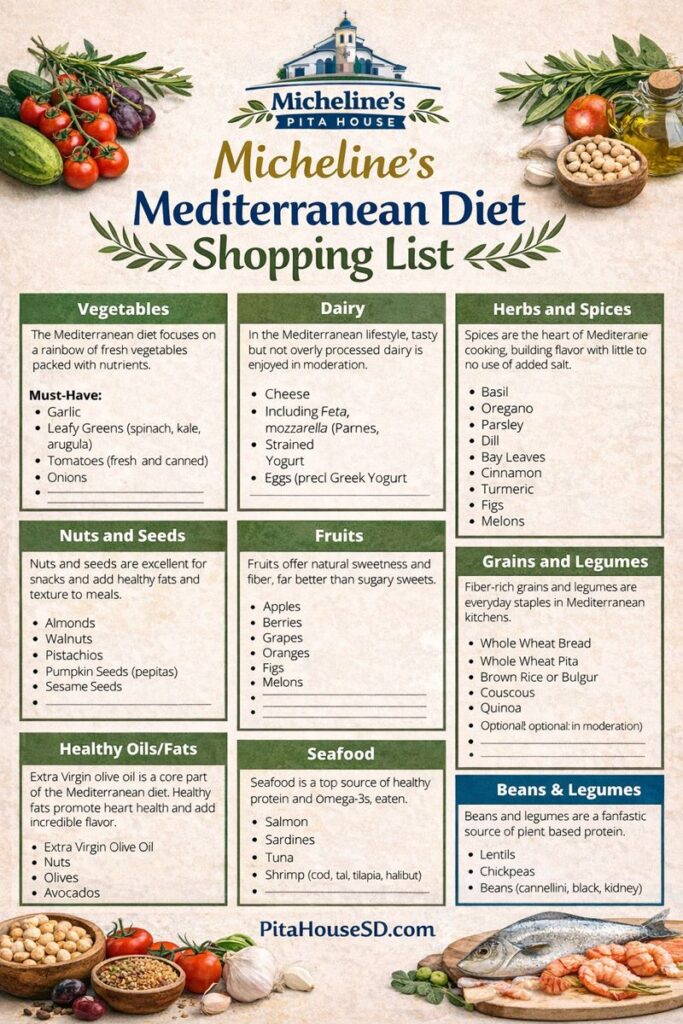
If you’ve ever searched for a mediterranean diet food list and felt like it all sounded clinical, here’s how we explain it in our kitchen: we build meals around plants, use extra virgin olive oil as our everyday fat, and treat fish, dairy, and meat as “supporting actors,” not the whole show. That simple pattern is also exactly what Mediterranean-style diet guides recommend: lots of vegetables and fruits, whole grains, legumes, nuts/seeds, olive oil, plus fish/seafood—while keeping sweets and heavily processed foods for rare occasions.
1) Vegetables (The Foundation of the Mediterranean Diet)
If we’re eating Mediterranean-style, vegetables show up at most meals—and in generous portions. One Mediterranean diet food list guide even frames it as at least 5 servings of vegetables daily as a practical target.
Here’s the everyday vegetable lineup we keep coming back to:
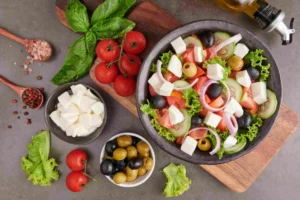
- Leafy greens: spinach, kale, mixed greens
- Tomatoes: cherry, vine, or chopped into salads
- Cucumbers: crisp, hydrating, perfect with lemon and herbs
- Eggplant: roasted or grilled until silky
- Zucchini: grilled, roasted, or folded into bowls
- Peppers: sweet or mildly spicy, fresh or roasted
- Onions & garlic: the base of flavor in so many Mediterranean dishes
If you want a “real life” way to eat this: start with a salad-style base and build up from there. Our Healthy Mediterranean Salads guide makes it easy to keep it fresh without overthinking it.
2) Fruits on the Mediterranean Diet
In our world, fruit is the default sweet—simple, seasonal, and satisfying. Many Mediterranean diet resources suggest 2–3 servings of fruit per day as a steady rhythm.
A Mediterranean diet fruit list we love:
- Citrus: oranges, lemons, limes, grapefruit
- Grapes: easy snack, naturally sweet
- Apples & pears: simple, reliable, portable
- Figs: fresh when you can find them, or dried in small amounts
- Pomegranates: bright, tangy, and festive
- Seasonal fruit emphasis: what looks best right now is usually the right choice
3) Whole Grains and Breads
When people ask “what foods are part of the Mediterranean diet?”, grains matter—especially whole grains. Mediterranean-style guidance commonly includes wholegrain breads/cereals daily as part of the base pattern.
Our list of food for Mediterranean diet (grain edition):
- Whole wheat pita (a classic base for balanced meals)
- Brown rice
- Bulgur
- Farro
- Barley
If you’re curious how this connects to restaurant food, we think of pita as a tool: it helps you turn veggies + protein + sauce into something satisfying. That’s why our menu leans into buildable options like Build Your Own and classics like a Pita Sandwich.
4) Legumes and Plant Proteins
This is where the Mediterranean diet becomes quietly powerful—especially if you want high-protein, vegan-friendly meals.
Beans and legumes show up repeatedly in Mediterranean diet guides as a weekly staple.
Our go-to plant proteins:
- Chickpeas (hello, hummus and hearty bowls)
- Lentils
- Fava beans
- White beans
If you’re building a Mediterranean grocery list, I’d start here—because legumes make it easy to eat well without needing meat at every meal. And if you want the most delicious “entry point,” start with hummus:
- Explore our Hummus
- Or make it party-friendly with Catering Hummus
5) Nuts and Seeds
Nuts and seeds are small, but they do big work in Mediterranean eating—adding crunch, satisfaction, and balance. They’re also commonly recommended a few times per week in Mediterranean-style plans.
Our everyday favorites:
- Walnuts
- Almonds
- Pistachios
- Sesame (tahini)
Tahini deserves its own moment—because it turns a simple bowl into something you crave. If you’ve ever wondered why, our Mediterranean Spices Mix Herbs and Seasoning explains how we build flavor without making food feel heavy.
Healthy Fats (Why Olive Oil Matters)
In a true Mediterranean kitchen, extra virgin olive oil isn’t a “special ingredient.” It’s the everyday one. Both PDFs you shared place EVOO right at the center of Mediterranean-style eating.
Our best mediterranean diet foods for healthy fats:
- Extra virgin olive oil (drizzle, dress, finish)
- Olives
- Nuts & seeds
This is also why dips matter so much in Mediterranean food—because they pair plant proteins + olive oil + herbs in a way that feels generous and satisfying.
6) Mediterranean Diet Fish and Seafood
Fish shows up again and again in Mediterranean diet guidance—often as a weekly staple, commonly around 2 servings per week or more in Mediterranean-style plans.
A simple mediterranean diet fish list:
- Salmon
- Sardines
- Tuna
- Shrimp
- Cook it simply: grilled or baked instead of deep-fried
7) Dairy in the Mediterranean Diet (Used With Intention)
We use dairy like a “finishing touch,” not the foundation. Mediterranean-style resources typically include yogurt and cheese in moderate amounts.
Common options:
- Yogurt (especially plain/unsweetened styles)
- Feta
- Halloumi
- Cheese in moderation
8) Poultry, Eggs, and Meat (Less Often, Better Quality)
This is where people get surprised: Mediterranean eating isn’t “no meat,” it’s “not the center of every plate.” The Queensland Mediterranean-style guide lists chicken/turkey and eggs as included, with red meat and sweets kept smaller/less often.
Our practical approach:
- Chicken (often grilled/roasted)
- Eggs (a few times per week for many people)
- Lamb & beef (limited—more occasional than everyday)
Mediterranean Diet Food Chart – How Often We Eat Each Group
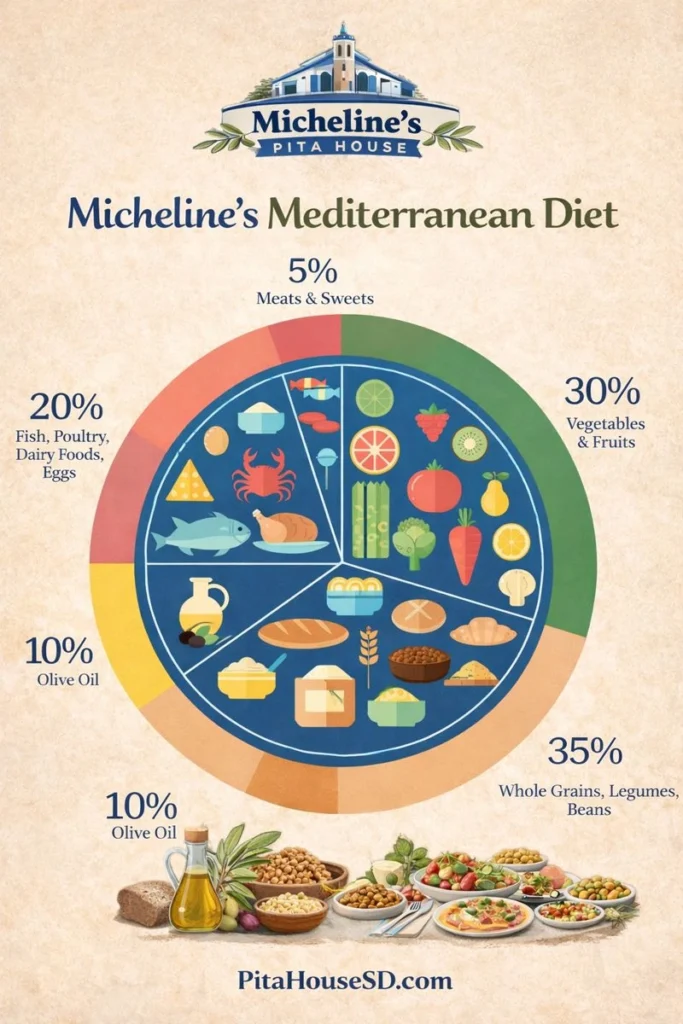
When guests ask me “How often should I actually eat these foods?”, I always bring it back to rhythm, not rules.
Mediterranean eating works because it’s predictable, flexible, and repeatable—the same reason it’s been part of family kitchens for generations.
Below is a clear Mediterranean diet food chart you can follow at home or use to understand how we naturally balance meals in our kitchen.
Daily Foods (The Base of Every Meal)
These are the foods we rely on every single day—they form the foundation of Mediterranean-style eating.
- Vegetables (raw, roasted, grilled, or sautéed)
- Fruits (fresh and seasonal)
- Whole grains (pita, bulgur, brown rice, barley)
- Extra virgin olive oil
- Herbs, spices, garlic, lemon
How it looks on the plate:
A vegetable-forward bowl, chicken salad, or pita with olive oil and herbs leading the flavor—not meat or heavy sauces.
Weekly Foods (Regular, Balanced Additions)
These foods show up several times per week, adding protein, texture, and variety.
- Legumes (chickpeas, lentils, beans)
- Fish and seafood
- Yogurt and traditional cheeses
- Nuts and seeds
- Eggs
- Poultry
How it looks in real life:
Hummus and beans folded into bowls, grilled fish paired with vegetables, yogurt or feta used to finish—not overwhelm—a dish.
Occasional Foods (Enjoyed With Intention)
These foods aren’t forbidden—they’re just not everyday staples.
- Red meat
- Sweets and Mediterranean desserts
- Refined baked goods
How we think about it:
These are foods for special meals, celebrations, or shared moments—not daily fuel.
| Food Group | Frequency | How We Use It |
|---|---|---|
| Vegetables | Daily | Base of most meals |
| Fruits | Daily | Snacks or light finish |
| Whole grains | Daily | Pita, bowls, sides |
| Olive oil | Daily | Primary fat |
| Legumes | 3–5x per week | Hummus, bowls, salads |
| Fish & seafood | 2–3x per week | Grilled or baked |
| Dairy (yogurt/cheese) | A few times/week | Small portions |
| Poultry & eggs | Weekly | Balanced protein |
| Red meat | Occasionally | Special meals |
| Sweets | Occasionally | Celebrations |
This balance mirrors what major Mediterranean-style nutrition guides recommend—but expressed in a way that’s livable, not clinical.
Why This Works (And Why We Believe In It)
This pattern aligns perfectly with our mission at Micheline’s Pita House—to serve food that’s:
- Rooted in authentic Mediterranean tradition
- Built around fresh, high-quality ingredients
- Naturally supportive of health and wellness
- Flexible for vegan, vegetarian, and high-protein lifestyles
- Meant to be shared and enjoyed together, not rushed
That philosophy isn’t marketing—it’s how we’ve always cooked and hosted our community.
Mediterranean Diet Meal Examples (What a Real Day of Eating Looks Like)
One of the most common questions I hear is: “Okay, but what do I actually eat in a day?”
The Mediterranean diet isn’t about perfect meals or strict plans. It’s about simple, repeatable choices that feel good and taste even better. Here’s how a real Mediterranean-style day often looks in our kitchen, and how we naturally eat when we’re cooking for family and community.
Mediterranean Breakfast Ideas (Simple, Light, Nourishing)
Breakfast in Mediterranean culture is usually modest, not heavy. The goal is to start the day energized—not weighed down.
Typical Mediterranean breakfast options:
- Plain yogurt topped with fresh fruit and a handful of nuts
- Whole-grain toast or pita with olive oil or tahini
- Fresh fruit with coffee or tea
- Eggs with sautéed vegetables and herbs (a few times per week)
Why this works:
You get protein, healthy fats, and fiber—without sugar spikes or heaviness.
Mediterranean Lunch Ideas (Balanced and Satisfying)
Lunch is where Mediterranean eating really shines: vegetables lead, protein supports, and flavor ties everything together.
A Mediterranean-style lunch might include:
- A grain or greens bowl with chickpeas, vegetables, olive oil, and tahini
- A pita filled with vegetables, legumes, and a protein of choice
- A hearty salad finished with herbs, lemon, and olive oil
This is exactly the thinking behind our build-your-own bowls and pita combinations—they let you create balance naturally, without counting or restricting.
Mediterranean Dinner Ideas – Comforting, Not Heavy or Expensive
Dinner is meant to be shared and unrushed. Portions are satisfying, but the plate still leans plant-forward.
Common Mediterranean dinner plates:
- Grilled or baked fish with vegetables and grains
- Legumes or beans simmered with herbs and olive oil
- Poultry paired with roasted vegetables
- Vegetable-forward dishes finished with yogurt or cheese
What you’ll notice:
Vegetables always take up more space than meat—and that’s intentional.
Mediterranean Snacks (Simple, Real Food)
Snacking isn’t a problem in Mediterranean eating—it just looks different.
Easy Mediterranean snack ideas:
- Fresh fruit
- Olives
- Nuts or seeds
- Vegetables with hummus
- Yogurt with a drizzle of honey
If you’ve ever dipped pita into hummus mid-afternoon and felt satisfied without feeling heavy—that’s Mediterranean eating doing its job.
How This Fits Real Life (And Eating Out)
You don’t need to cook every meal at home to eat Mediterranean-style. You just need to know what to look for:
- Choose vegetable-forward dishes
- Look for olive oil–based dressings and sauces
- Balance grains + legumes + protein
- Treat heavy desserts as occasional, not automatic
That’s why Mediterranean restaurants as [Pita House] feel so approachable—you’re not ordering “diet food.” You’re ordering real food that happens to be balanced.
Mediterranean Diet for Different Lifestyles (Flexible, Not One-Size-Fits-All)
One of the biggest misconceptions about the Mediterranean diet is that it only works one way.
In reality, it’s one of the most adaptable eating patterns in the world—which is exactly why people stick with it long-term.
Whether someone eats plant-based, vegetarian, or prefers higher protein, the Mediterranean food list adjusts naturally without losing its foundation.
Mediterranean Diet for Vegetarians
The Mediterranean diet is naturally vegetarian-friendly—no substitutions or “special versions” required.
Core vegetarian Mediterranean foods include:
- Chickpeas, lentils, fava beans, white beans
- Whole grains like bulgur, farro, brown rice
- Vegetables cooked with olive oil and herbs
- Yogurt, feta, and cheese in small amounts
- Nuts, seeds, tahini, and olive oil
Why it works:
Protein comes from legumes and dairy, fats come from olive oil and nuts, and meals stay filling without relying on meat.
Mediterranean Diet for Vegans
With a few simple adjustments, the Mediterranean diet becomes fully plant-based while staying balanced.
Vegan Mediterranean staples:
- Legumes (lentils, chickpeas, beans)
- Vegetables (especially leafy greens, tomatoes, eggplant, zucchini)
- Whole grains and pita
- Nuts, seeds, tahini
- Extra virgin olive oil
Tip: Traditional Mediterranean kitchens have always relied on beans, grains, and vegetables—animal products were never the centerpiece.
Mediterranean Diet for High-Protein Needs
Yes—the Mediterranean diet can absolutely support higher protein goals without becoming meat-heavy.
High-protein Mediterranean options:
- Fish and seafood (salmon, sardines, tuna)
- Poultry like grilled chicken
- Eggs (moderate amounts)
- Yogurt and cheese
- Legumes paired with grains
What’s different from typical high-protein diets?
- Protein is spread throughout the day, not overloaded into one meal
- It’s paired with fiber and healthy fats for better digestion and satiety
Mediterranean Diet for Families and Kids
This way of eating works especially well for families because:
- Foods are familiar and approachable
- Meals can be shared
- No separate “diet food” is required
Kids naturally gravitate toward:
- Pita and hummus
- Rice and grilled chicken
- Fresh fruit
- Yogurt and simple salads
That’s why Mediterranean food is often described as family food, not diet food.
Why This Flexibility Matters
Most diets fail because they:
- Feel restrictive
- Don’t adapt to social eating
- Require constant tracking
The Mediterranean diet succeeds because:
- You adjust portions, not principles
- You swap foods within the same food groups
- You eat based on availability and preference
This is exactly how it’s been practiced for generations.
Mediterranean Diet Grocery List (How We’d Shop for a Mediterranean Kitchen)
When people ask me for a Mediterranean diet grocery list, I always say the same thing:
shop like you’re cooking real food for real people — not following a trend.
This is the exact way we’d stock a Mediterranean kitchen. No specialty aisles. No confusing labels. Just fresh ingredients you’ll actually use.
Produce Shopping List (Always Start Here)
This is where most of your cart should go.
Vegetables
- Leafy greens (romaine, spinach, arugula)
- Tomatoes
- Cucumbers
- Eggplant
- Zucchini
- Bell peppers
- Onions
- Garlic
Fruits
- Lemons & oranges
- Apples
- Grapes
- Figs (fresh or dried)
- Pomegranates (seasonal)
How we think about produce:
Seasonal, colorful, and used generously — vegetables aren’t sides, they’re the main event.
Pantry Staples (The Mediterranean Backbone)
These items turn simple produce into satisfying meals.
Whole Grains
- Whole wheat pita
- Brown rice
- Bulgur
- Farro
- Barley
Legumes
- Chickpeas
- Lentils
- Fava beans
- White beans
Healthy Fats
- Extra virgin olive oil
- Olives
- Tahini
Why these matter:
These staples make the Mediterranean diet affordable, filling, and easy to repeat week after week.
Proteins & Seafood (Quality Over Quantity)
Protein supports the meal — it doesn’t dominate it.
Fish & Seafood
- Salmon
- Sardines
- Tuna
- Shrimp
Poultry & Eggs
- Chicken
- Eggs
Plant-Based Proteins
- Chickpeas
- Lentils
- Beans
This balance is why the Mediterranean diet works so well for high-protein, vegetarian, and flexitarian eaters.
Dairy & Eggs (Used With Intention)
Dairy is enjoyed — just not overloaded.
- Yogurt
- Feta
- Halloumi
- Eggs
Think flavor accents, not heavy portions.
Herbs and Spices (Where the Flavor Lives)
This is where Mediterranean food truly comes alive.
Fresh Herbs
- Parsley
- Mint
- Dill
- Cilantro
Dried Spices
- Cumin
- Paprika
- Black pepper
- Oregano
Herbs replace heavy sauces and make simple food exciting.
A Simple Shopping Rule We Live By
If your cart looks like:
- Mostly produce
- A few grains and legumes
- Olive oil and herbs
- Some fish or chicken
You’re doing it right.
This grocery list supports everything from easy Mediterranean diet recipes to full family meals — without feeling restrictive or expensive.
Mediterranean Diet Food List for Beginners (Where to Start Without Overthinking)
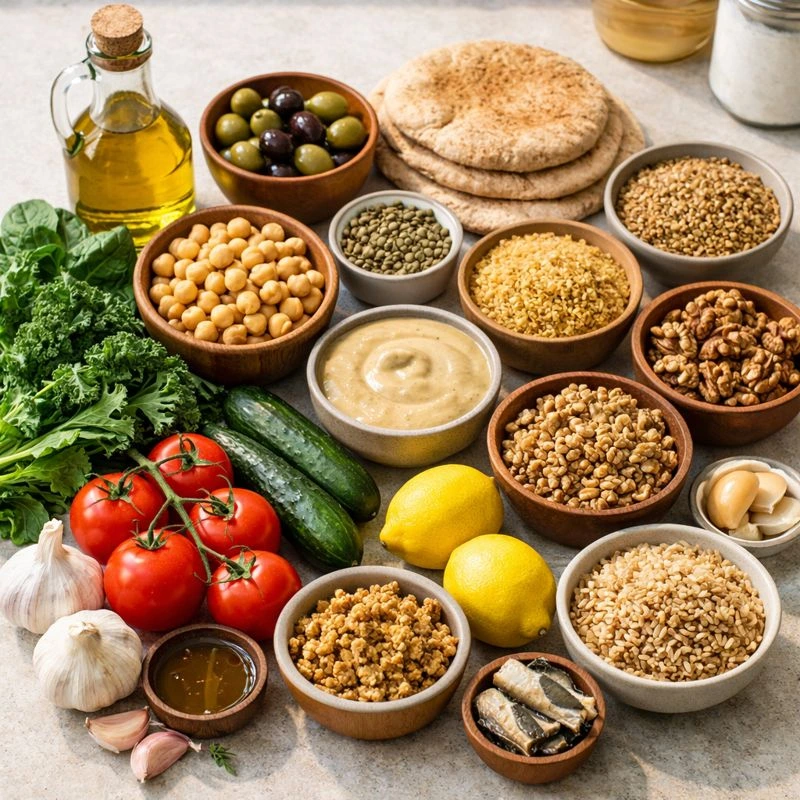
If you’re new to the Mediterranean diet, I want to say this first, you don’t need to change everything at once.
In Mediterranean homes, no one wakes up one day and follows a perfect food chart. We start small, cook simply, and let habits grow naturally. That’s exactly how beginners should approach this way of eating.
A Simple Starter Food List
If you buy only these foods, you can already eat Mediterranean-style.
Vegetables
- Tomatoes
- Cucumbers
- Greens
- Onions & garlic
Fruits
- Apples
- Oranges
- Grapes
Grains
- Whole wheat pita
- Brown rice or bulgur
Proteins
- Chickpeas
- Lentils
- Eggs
- Chicken or fish
Fats
- Extra virgin olive oil
That’s it. This short list alone covers the core of the Mediterranean diet food list for beginners.
Common Beginner Mistakes to Avoid
Most people struggle not because the diet is hard — but because they overthink it.
What we see often:
- Trying to follow strict meal plans
- Focusing on calories instead of ingredients
- Removing foods instead of adding better ones
- Expecting instant results
What works better:
- Add vegetables to meals you already eat
- Swap butter or other oils for olive oil
- Eat fish once or twice a week
- Enjoy fruit instead of sugary desserts
Progress beats perfection every time.
How to Build a Mediterranean Plate
This is the easiest way to think about meals:
- Half the plate: vegetables
- One quarter: whole grains or legumes
- One quarter: fish, chicken, eggs, or beans
- Finish with: olive oil, herbs, lemon
No measuring. No tracking. Just balance.
This plate works whether you’re cooking at home or choosing food while dining out.
Why Beginners Succeed on the Mediterranean Diet
Unlike restrictive diets, the Mediterranean approach:
- Feels familiar
- Uses everyday foods
- Fits family meals
- Encourages enjoyment, not stress
That’s why beginners stick with it, and why it becomes a lifestyle, not a phase.
What to Eat on a Mediterranean Diet (Daily Meal Examples)
One of the most common questions I hear is:
“What do you actually eat in a day on the Mediterranean diet?”
The answer is simple, real meals, made with real ingredients, meant to be enjoyed. Below are easy, everyday examples that show how the Mediterranean diet food list comes together without feeling repetitive or restrictive.
Mediterranean Diet Breakfast Ideas
Breakfast is light, nourishing, and balanced, never heavy.
Simple breakfast options:
- Yogurt with fruit, nuts, and a drizzle of honey
- Whole wheat pita with olive oil and sliced tomatoes
- Eggs with sautéed greens and onions
- Fruit with a handful of nuts
These breakfasts provide steady energy and protein without relying on sugar-heavy starts.
Mediterranean Diet Lunch Ideas
Lunch is where vegetables, grains, and legumes shine.
Everyday lunch ideas:
- Chickpea and vegetable salad with olive oil and lemon
- Lentil soup with whole wheat pita
- Grain bowls with roasted vegetables and tahini
- Hummus with vegetables, olives, and pita
This is where Mediterranean diet recipes easy truly live, food that’s fast, filling, and flavorful.
Mediterranean Diet Dinner Ideas
Dinner is satisfying but never excessive.
Balanced dinner ideas:
- Grilled fish with vegetables and brown rice
- Chicken with roasted vegetables and herbs
- Vegetable and bean stews
- Shared plates with salads, grains, and proteins
Meals are meant to be shared, not rushed.
Mediterranean Diet Snack Ideas
Snacks are simple and intentional.
Healthy snack options:
- Fresh fruit
- Nuts or seeds
- Yogurt
- Vegetables with hummus
Snacking supports energy, it’s not about constant eating.
A Note on Eating Out
You don’t have to stay home to eat Mediterranean-style. Look for:
- Grilled fish or chicken
- Salads with olive oil
- Vegetable-forward dishes
- Legume-based sides
This flexibility is why the Mediterranean diet fits real life so well.
Foods to Limit on the Mediterranean Diet (What We Use Less Often)

In a Mediterranean kitchen, nothing is labeled “bad.”
Some foods simply don’t show up very often, and that gentle balance is what keeps this way of eating realistic and enjoyable.
Instead of strict rules, we focus on frequency.
Processed Foods
These foods are used sparingly because they don’t align with traditional Mediterranean cooking.
Limited items:
- Packaged meals
- Highly processed snacks
- Ready-made sauces with long ingredient lists
Mediterranean cooking starts with raw ingredients and builds flavor naturally.
Refined Sugar
Sweetness exists, just not every day.
Used less often:
- Sugary desserts
- Sweetened drinks
- Baked goods made with refined sugar
What replaces them:
Fresh fruit, nuts, and naturally sweet ingredients enjoyed at the end of meals.
Highly Processed Oils
Fat matters, but quality matters more.
Limited oils:
- Refined vegetable oils
- Industrial seed oils
Preferred fats:
Extra virgin olive oil, olives, nuts, and seeds, these define the best Mediterranean diet foods.
Excess Red Meat
Meat is respected, not overused.
Used occasionally:
- Beef
- Lamb
Protein more often comes from:
- Fish
- Legumes
- Poultry
- Eggs
This balance supports long-term health without removing enjoyment.
Why Limiting Feels Better Than Eliminating
The Mediterranean diet works because:
- Nothing feels forbidden
- Meals remain social and satisfying
- Food stays joyful
This mindset removes stress — and that’s why people stick with it.
Why the Mediterranean Diet Is Considered Sustainable and Balanced
After years of cooking and sharing Mediterranean food, I’ve seen one truth again and again:
the reason this way of eating lasts is because it feels good to live with.
What makes the Mediterranean diet last is that it fits real life, not short-term restriction
Long-Term Eating, Not Short-Term Restriction
Nothing about the Mediterranean diet feels temporary.
There are:
- No strict eliminations
- No extreme rules
- No “on” or “off” days
Instead, you eat foods you enjoy — just in better balance. That’s why people don’t burn out or rebound. The food fits into life, not the other way around.
Social Eating and Shared Meals
Mediterranean food is meant to be shared.
Meals are:
- Eaten slowly
- Enjoyed with family or friends
- Served family-style
This shared experience naturally encourages moderation, satisfaction, and connection — something most modern diets completely ignore.
Flavor, Satisfaction, and Balance
One reason people fail on diets is boredom. Mediterranean food avoids that entirely.
Flavor comes from:
- Herbs and mediterranean spices
- Olive oil
- Garlic, lemon, and fresh ingredients
Meals are filling, colorful, and satisfying — not bland or restrictive. When food tastes good, consistency becomes effortless.
Why Sustainability Matters More Than Perfection
Health doesn’t come from one perfect week.
It comes from years of steady habits.
The Mediterranean diet supports:
- Everyday cooking
- Eating out comfortably
- Family meals
- Cultural traditions
That’s what makes it one of the most respected and widely followed eating patterns in the world.
Mediterranean Diet Food List – Frequently Asked Questions
These are the questions guests ask us most — answered simply, honestly, and without medical jargon.
What are the top foods on the Mediterranean diet?
The core foods we rely on most are:
- Vegetables
- Fruits
- Whole grains
- Legumes
- Extra virgin olive oil
- Fish
If your plate starts with vegetables and ends with olive oil, you’re already on the right track.
Can the Mediterranean diet be vegetarian or vegan?
Yes — easily.
Many Mediterranean meals are naturally plant-based, built around:
- Chickpeas and lentils
- Vegetables
- Whole grains
- Nuts and seeds
Fish, dairy, and eggs are optional, not required. This flexibility is why so many people succeed long-term.
Is the Mediterranean diet high in protein?
It can be — without relying heavily on meat.
Protein comes from:
- Fish and seafood
- Legumes and beans
- Eggs
- Nuts and seeds
- Poultry
It’s balanced, steady protein that supports energy and satisfaction.
Are eggs allowed on the Mediterranean diet?
Yes. Eggs are enjoyed in moderation.
They’re often paired with:
- Vegetables
- Greens
- Whole grains
Eggs support protein intake without overwhelming the plate.
Is the Mediterranean diet anti-inflammatory?
Yes — naturally.
Many Mediterranean foods are known for supporting balance in the body, including:
- Olive oil
- Fruits and vegetables
- Whole grains
- Fish
The diet focuses on whole foods and limits heavily processed ingredients, which supports overall well-being.
Can beginners follow the Mediterranean diet easily?
Absolutely.
There’s no strict learning curve. Beginners succeed by:
- Cooking simply
- Shopping intentionally
- Eating familiar foods prepared better
It’s one of the most approachable eating styles available.
Bringing the Mediterranean Diet to the Table (Our Kitchen Perspective)
At Micheline’s Pita House, this way of eating isn’t a concept — it’s how we cook, share, and welcome people every day.
Mediterranean food, to us, means:
- Real ingredients, prepared fresh
- Vegetable-forward plates that feel satisfying
- High-protein options without heaviness
- Vegan and vegetarian dishes that stand on their own
- Food meant to be shared, not rushed
Everything we serve reflects the same principles behind the Mediterranean diet food list — balance, flavor, and care.
If you’re curious about how this philosophy shows up on the table, you might enjoy exploring our approach to Authentic Mediterranean Cuisine, learning the difference between Baba Ganoush vs Hummus, or discovering why so many guests consider us one of the Healthy Food Restaurants in San Diego.
Whether you’re cooking at home or gathering around a table with us, the Mediterranean diet isn’t about rules — it’s about enjoying food that feels good, tastes honest, and brings people together.