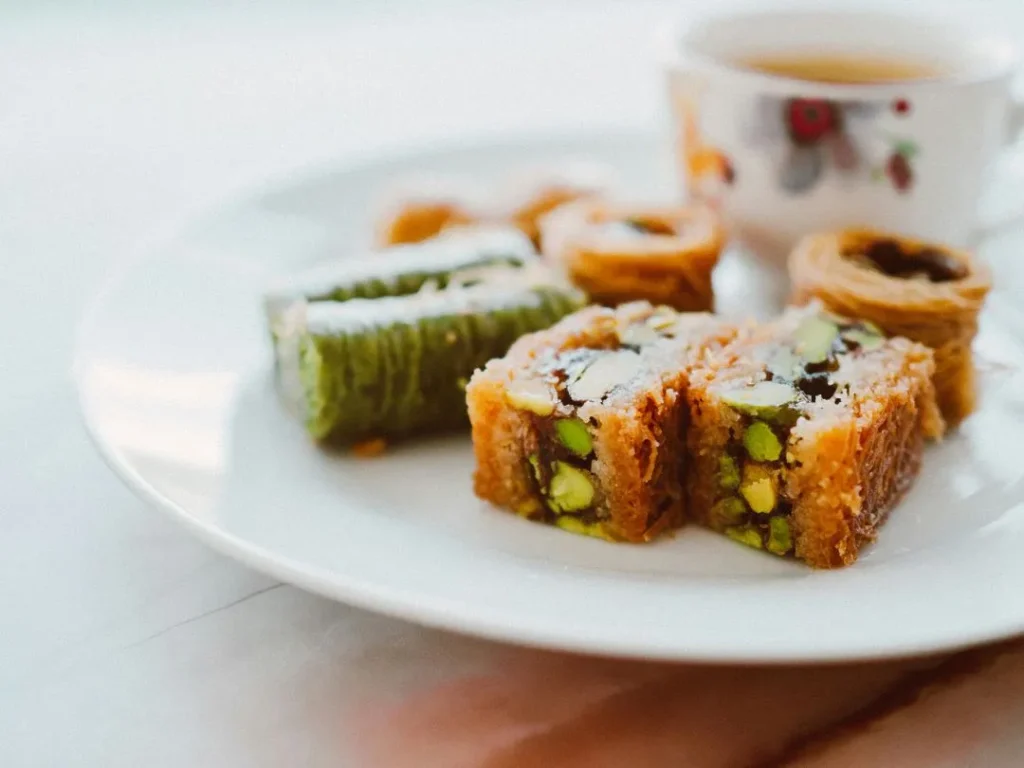
Baklava is a rich and indulgent Mediterranean dessert made with delicate layers of thin phyllo (filo) pastry, filled with finely chopped nuts such as pistachios or walnuts, and sweetened with honey or sugar syrup. This well-known pastry originates from the Middle Eastern and Mediterranean regions. It is baked until the layers become golden and crisp, then finished with syrup that may be flavored with ingredients like cinnamon, rosewater, or orange blossom water.
We serve baklava as the final note of a meal, not the main event. Its roots trace back to the Ottoman Empire, and over time it became a beloved dessert across the Middle East, the Balkans, and parts of Central Asia—each region adding its own touch while keeping the same core idea: layers, nuts, and balance. Traditionally, baklava is baked in large trays, cut into diamond or square pieces before going into the oven, then finished with cooled syrup after baking so the layers stay crisp instead of soggy.
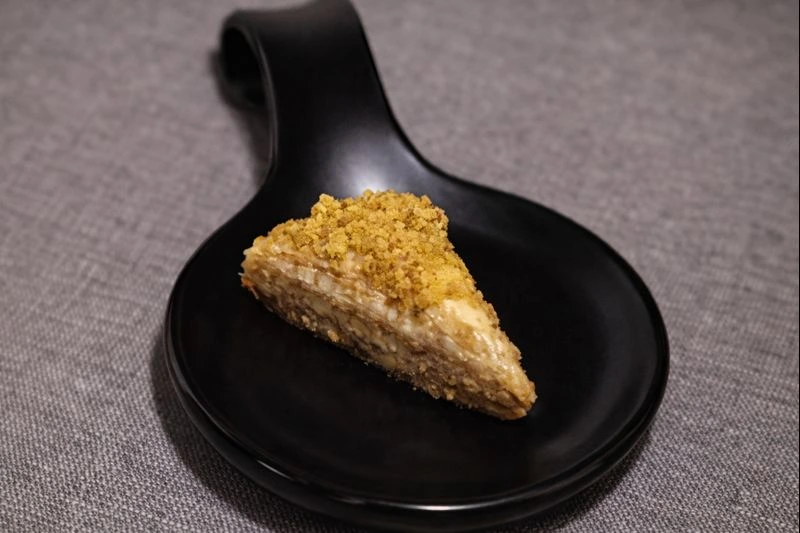
Around our tables, baklava usually comes after something savory, when flavors have settled and people want a satisfying but not overwhelming finish. If you’re curious about the different styles and portions we offer, you can also check our Baklava menu to see how it’s typically served.
What Is Baklava?
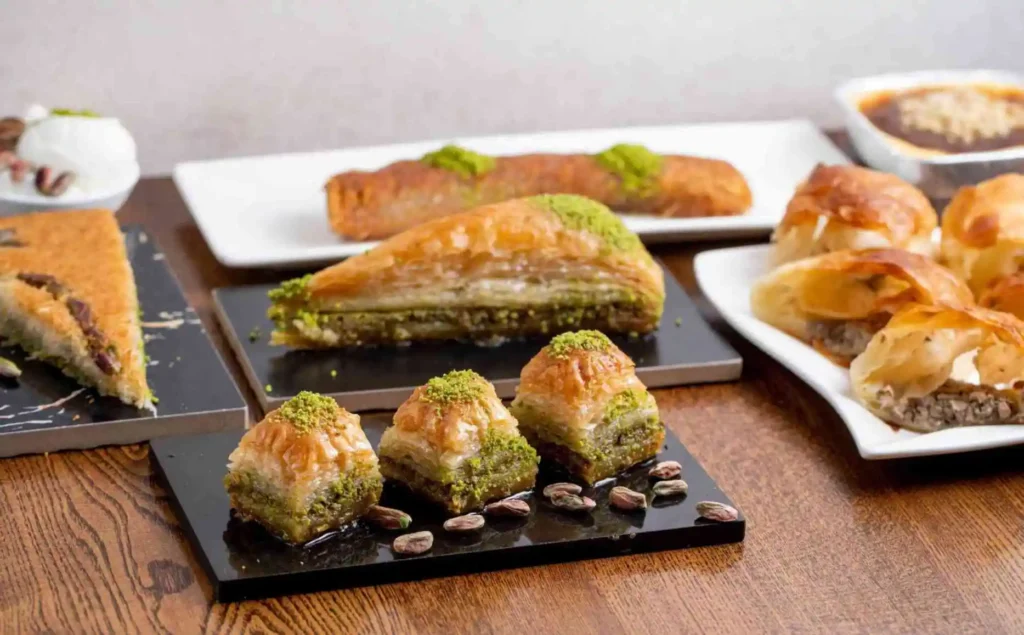
Baklava is a rich, sweet Mediterranean dessert made from thin layers of phyllo (filo) dough, filled with chopped nuts such as pistachios or walnuts, and soaked in honey or sugar syrup. Popular across the Middle East and Mediterranean regions, this dessert is baked until golden and crispy, then topped with fragrant syrup that may include flavors like cinnamon, rosewater, or orange blossom water. Its flaky texture and nutty filling make it a traditional treat often served during celebrations and special occasions.
Key Points:
-
Layers: Thin, buttery phyllo pastry stacked with nut fillings.
-
Ingredients: Phyllo dough, butter, pistachios or walnuts, and honey or sugar syrup.
-
Variations: Turkish baklava often uses pistachios, Greek versions use walnuts and cinnamon, while Lebanese styles may include rosewater or orange blossom syrup.
-
Serving: Typically served at room temperature and sometimes garnished with nuts or cream.
When we explain baklava to guests for the first time, we keep it simple. It’s all about layers and balance. The phyllo bakes into crisp, delicate sheets, the nuts add warmth and depth, and the syrup brings everything together without making it soggy. Baklava isn’t meant to be heavy or overpowering—one or two pieces are usually enough to feel satisfied.
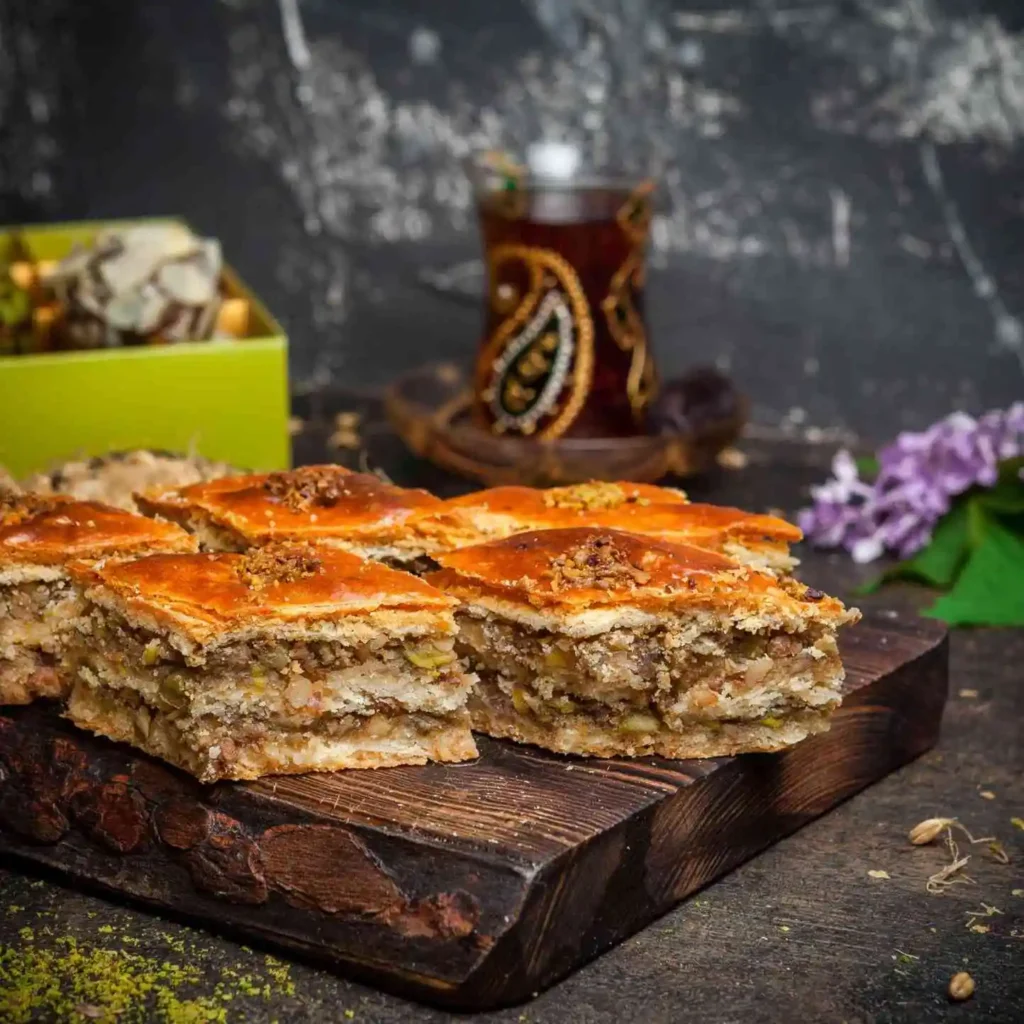
Across Mediterranean cultures, baklava has been made and shared for generations, with slight regional differences but the same foundation: thin pastry, nuts, and a light sweetness. Around our tables, it’s most often enjoyed at the end of a meal, especially after something savory like Chicken Shawarma when people want a crisp, nutty finish instead of a rich, creamy dessert.
Decision help: Baklava is a great choice if you enjoy desserts that are crunchy, nut-forward, and not overly sweet. If you’re expecting a soft cake or a chocolate-based dessert, baklava offers a very different—often pleasantly surprising—experience.
What Is Inside Baklava?

In some regional styles, baklava follows a very precise structure. Syrian baklava, for example, is traditionally made with around 24 thin, buttered layers of phyllo dough, filled with finely chopped pistachios or walnuts, then finished with a fragrant syrup made from sugar, lemon juice, and orange blossom water. While it’s shaped in different ways, the classic diamond cut is the most common and instantly recognizable.
We often point this out to guests who notice how crisp and structured baklava feels when they bite into it. Those many thin layers aren’t just for show—they’re what create that light crunch on top and the tender, nut-filled center underneath. It’s a style that reflects patience and care, where texture matters just as much as sweetness.
Baklava Main Ingredients Explained Simply
At its core, baklava relies on just a few ingredients, but each one matters. There’s nothing extra or hidden inside—the texture, flavor, and balance all come from how these basic components work together. When baklava is done right, you can taste each layer instead of one ingredient overpowering the rest. Common ingredients in traditional baklava include:
Phyllo dough: Ultra-thin, paper-like sheets that bake into crisp, flaky layers. This is what gives baklava its signature crunch rather than a soft or bready texture.
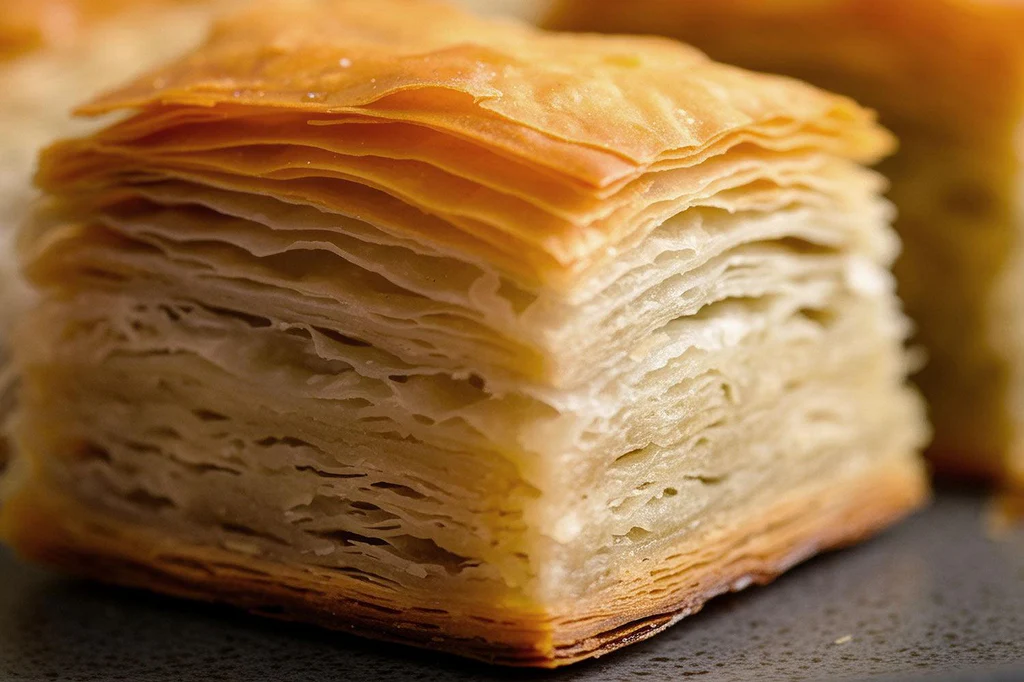
- Nuts: Most commonly pistachios or walnuts, with almonds used less often. Pistachios are typical in Turkish and Middle Eastern styles, while walnuts appear more in Greek and Balkan versions.
- Butter: Melted butter, sometimes clarified, brushed between each layer to help the phyllo brown evenly and develop richness without heaviness.
- Syrup: A light syrup made from sugar, water, and lemon juice, occasionally infused with orange blossom water, rose water, cinnamon, or honey, depending on regional tradition.
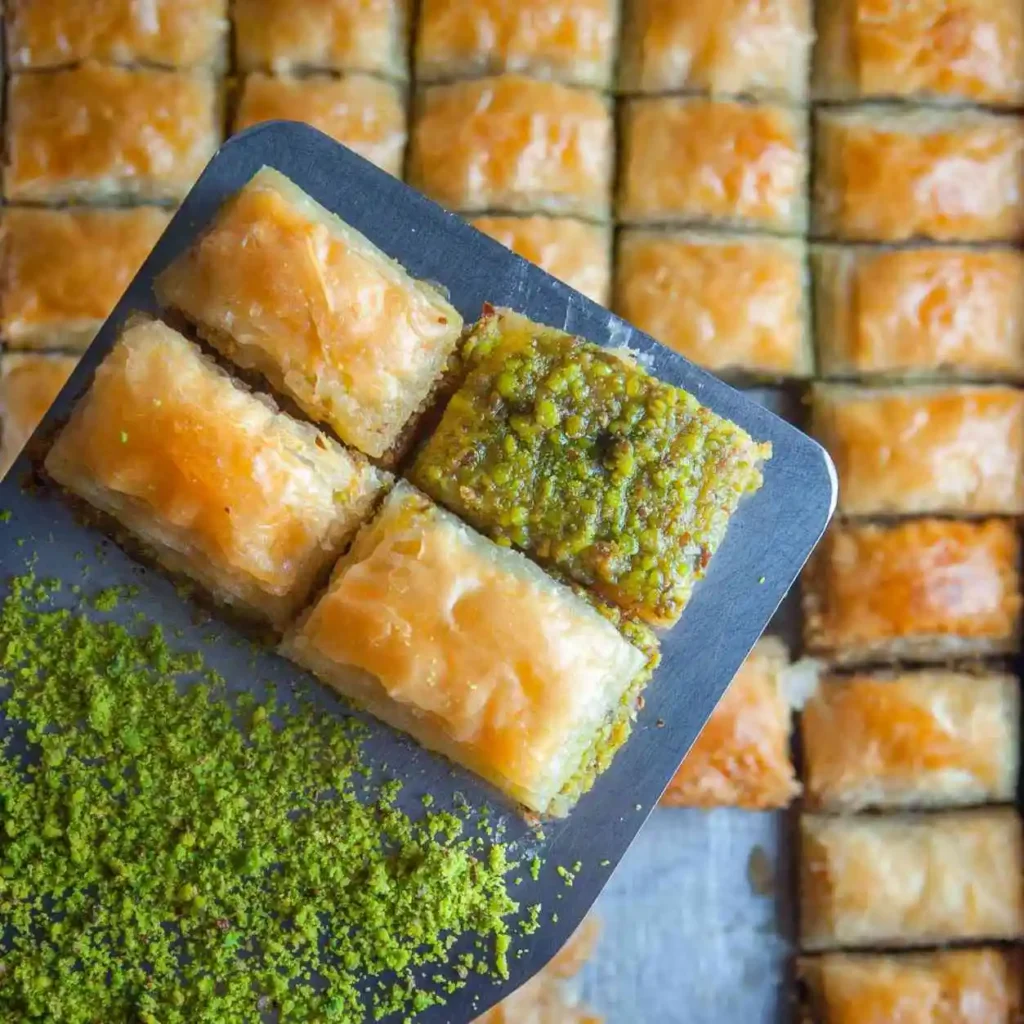
Together, these ingredients create a dessert that feels indulgent but structured—crispy on top, nutty in the center, and gently sweet throughout.
What Nuts Are in Baklava?
The nuts are the heart of baklava. They’re what give the dessert its depth, warmth, and character, balancing the crisp phyllo and the sweetness of the syrup. While baklava looks delicate, the flavor comes largely from the nuts inside, which is why different regions favor different varieties.
The most common nuts used in baklava include:
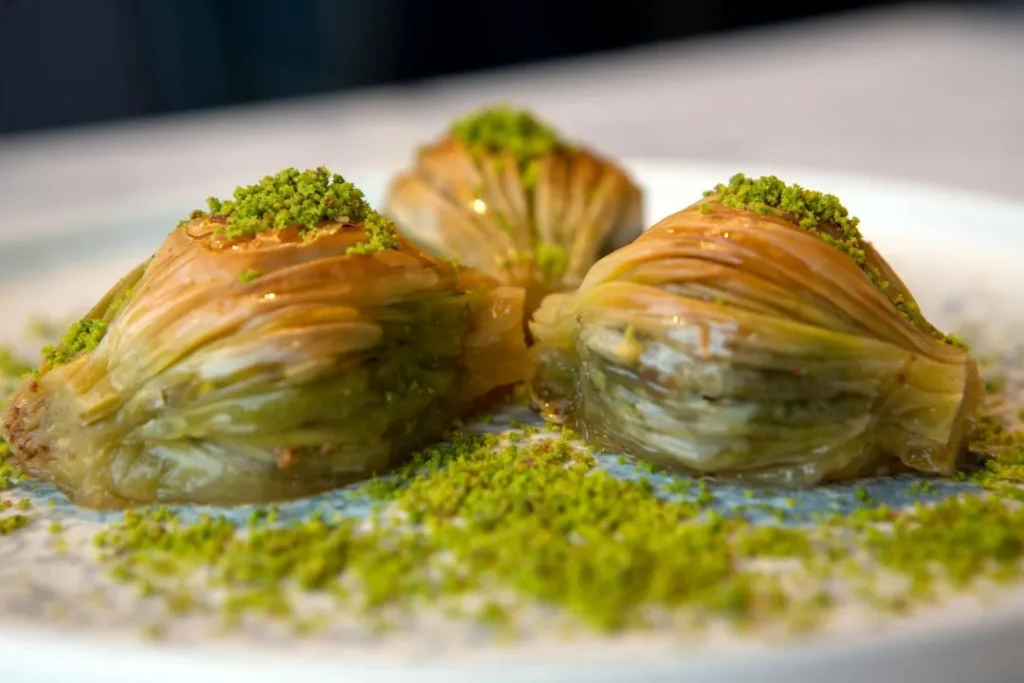
- Pistachios: Bright green, slightly sweet, and rich without being heavy. Pistachios are especially common in Turkish and Middle Eastern baklava and are often what people picture when they think of classic baklava.
- Walnuts: Earthier and more robust in flavor. Walnuts are traditionally used in Greek and Balkan-style baklava, giving it a deeper, more toasted taste.
- Almonds: Used less frequently, but sometimes added or blended in certain regional or modern variations for a lighter, milder nut flavor.
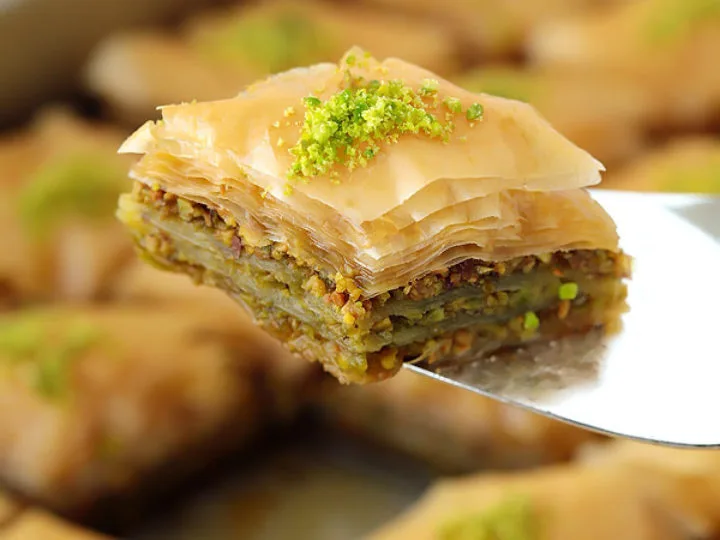
One thing that often surprises people is what baklava doesn’t contain. Peanuts aren’t traditionally used, and the nut filling is always finely chopped—not whole—so every bite has an even texture. This careful preparation is what keeps baklava balanced instead of chunky or uneven.
If you enjoy desserts that are nut-forward and layered with flavor rather than dominated by sugar, baklava’s nut filling is usually what wins you over.
Where Is Baklava From? Greek, Turkish, or Mediterranean?
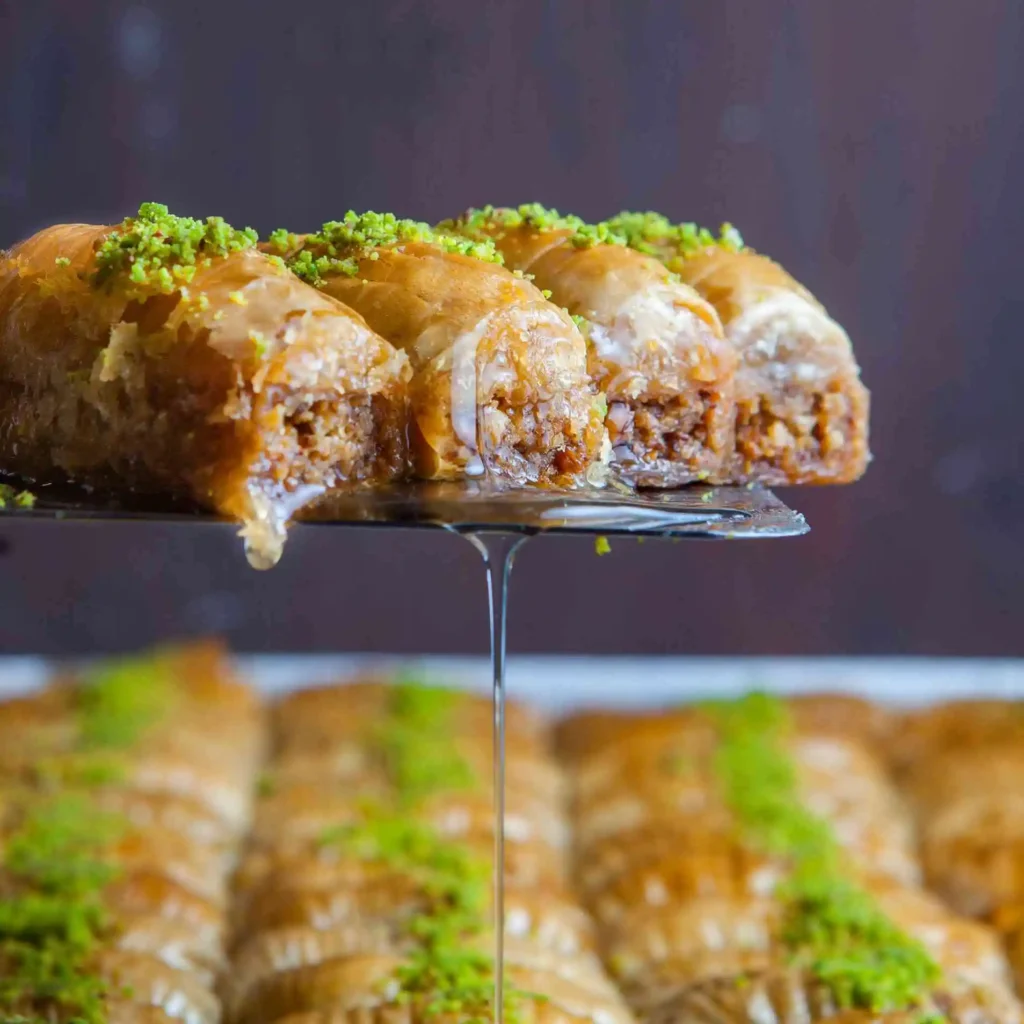
Baklava comes from a shared Mediterranean and Middle Eastern food tradition, not from a single country. Its roots are commonly traced back to the Ottoman Empire, where layered pastries made with thin dough, nuts, and syrup were refined and spread across regions through trade, migration, and family kitchens. Over time, baklava became deeply woven into the food cultures of Turkey, Greece, and many neighboring countries—each shaping it slightly differently while keeping the same foundation.

What this means in practice:
- Turkey: Known for pistachio-forward baklava, especially in regions like Gaziantep, with lighter syrup and very fine phyllo layers.
- Greece: Often made with walnuts and warmer spice notes, sometimes including cinnamon, resulting in a deeper, more aromatic flavor.
- Middle Eastern regions: Frequently use pistachios and floral notes like orange blossom or rose water, with precise layering and crisp finishes.
Rather than belonging to one place, baklava belongs to the Mediterranean table as a whole. That’s why debates about ownership come up so often—it’s a dessert tied to memory, tradition, and family gatherings more than borders.
Learn more about the origins of baklava on Wikipedia.
Greek Baklava vs Turkish Baklava – What’s the Difference?
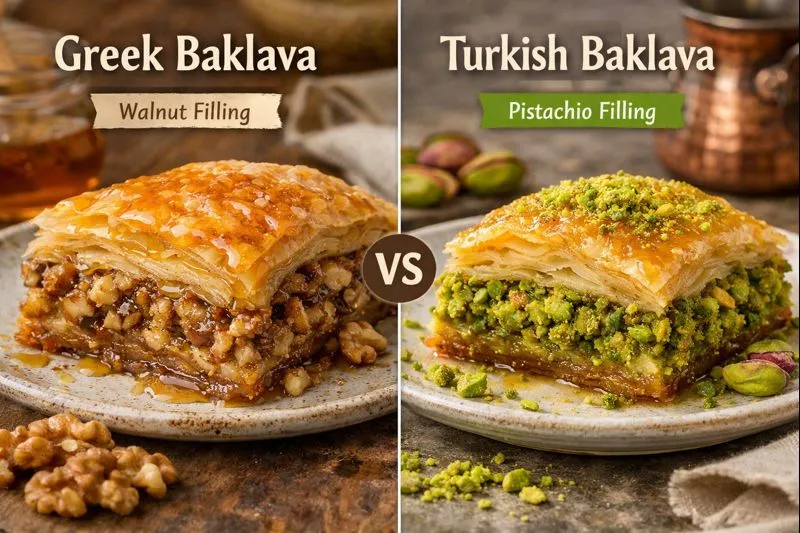
Greek and Turkish baklava are built on the same idea—thin phyllo layers, chopped nuts, and syrup—but they differ in balance. Greek baklava is usually walnut-based with warmer spice notes, while Turkish baklava is most often pistachio-forward with lighter syrup and finer, crisper layers.
From what we see serving guests, the choice usually comes down to texture and sweetness rather than origin. Some people prefer a richer, heartier bite, while others lean toward something lighter and cleaner on the palate.
| Feature | Greek Baklava | Turkish Baklava |
| Common nuts | Walnuts | Pistachios |
| Sweetness level | Slightly richer, sometimes spiced | Lighter, cleaner sweetness |
| Spices | Often includes cinnamon | Rarely spiced |
| Syrup style | Thicker or more aromatic | Lighter syrup |
| Phyllo layers | Slightly thicker, heartier feel | Very fine, delicate layers |
| Overall texture | Rich and comforting | Crisp and refined |
Around the table, both styles shine depending on the meal. After something grilled or savory, many guests lean toward pistachio baklava for its lighter finish. After a longer, family-style meal, walnut baklava often feels more familiar and comforting.
What Does Baklava Taste Like?

Baklava’s flavor comes in layers, not all at once. It’s meant to be experienced step by step, which is why even a small piece feels complete rather than overwhelming.
How Baklava Tastes, One Bite at a Time
- First bite – crisp and light:
The top layers of phyllo crackle gently as you bite in. It’s flaky and airy, not dense or bready, setting the tone before any sweetness comes through. - Middle – warm and nutty:
As you chew, the chopped nuts take over. Pistachios bring a slightly sweet, rich flavor, while walnuts feel deeper and more toasted. This is where baklava gets most of its character. - Finish – gently sweet:
The syrup shows up last, coating the bite without soaking it. It’s sweet, but not sharp or sugary, allowing the nut flavors to stay in focus instead of being drowned out.
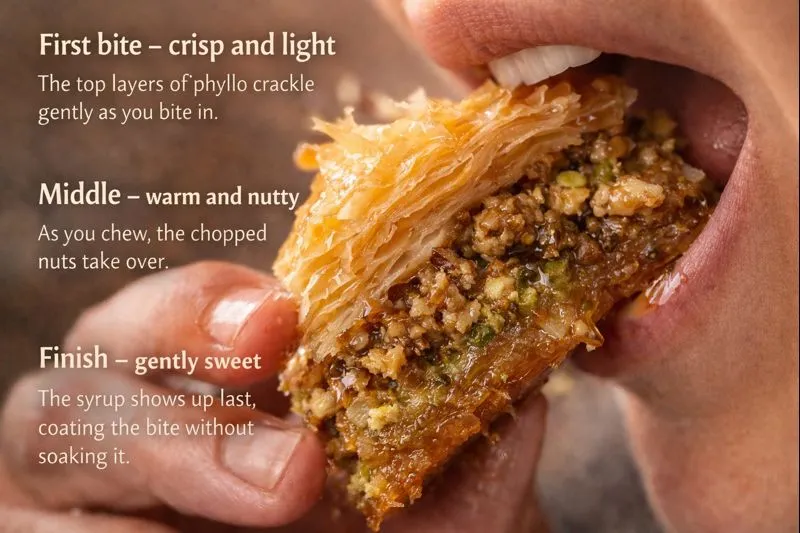
This layered tasting experience is why baklava works so well after savory dishes. After something seasoned or grilled, that crisp-nutty-sweet progression feels balanced and satisfying instead of heavy.
Baklava Nutrition Facts & Calories
Baklava is rich, but it’s also portion-based. Most people enjoy one small piece, not a plateful, which makes understanding the nutrition per piece more helpful than looking at a whole tray. The ingredients—nuts, butter, and syrup—explain both the flavor and the calorie count.

Baklava Nutrition Information (Per 1 Piece, Approximate)
| Nutrition Item | Approximate Amount |
| Calories | 180–250 calories |
| Total Fat | 9–15 g |
| Saturated Fat | 3–6 g |
| Carbohydrates | 20–30 g |
| Sugars | 12–20 g |
| Protein | 3–5 g |
| Fiber | 1–2 g |
| Cholesterol | 15–30 mg |
| Sodium | 60–120 mg |
Values vary based on nut type (pistachio vs walnut), syrup amount, and portion size.
How Calories Change by Type?
- Pistachio baklava: Usually on the lower end of the calorie range due to lighter syrup and finer layers.
- Walnut (Greek-style) baklava: Often slightly higher in calories because of denser nuts and richer syrup.
- Larger cuts or thicker layers: Increase calories quickly, even if ingredients stay the same.
Baklava isn’t meant to be eaten like cake or cookies. It’s designed for small portions, which is why one piece often feels enough—especially after a full Mediterranean food.
Is Baklava Healthy or Unhealthy?
Baklava isn’t an everyday health food, but it isn’t junk either. Whether baklava feels “healthy” or unhealthy depends on portion size, ingredients, and frequency, not on the dessert itself. In Mediterranean cultures, baklava has always been treated as an occasional pleasure—shared, small, and enjoyed after a meal.
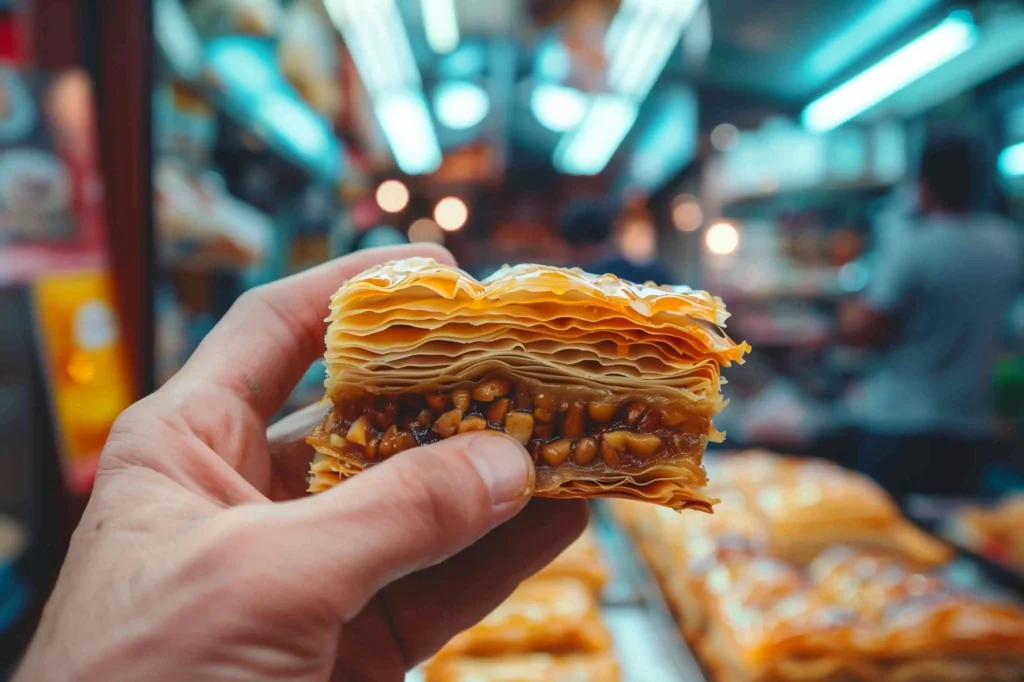
When Baklava Can Be Part of a Balanced Diet vs When It’s Not
| Situation | More Balanced Choice | Less Healthy Choice |
| Portion size | One small piece | Multiple large pieces |
| How it’s eaten | After a full savory meal | On its own or as a snack |
| Sweetness level | Nut-forward with light syrup | Heavily soaked in syrup |
| Frequency | Occasionally | Frequently or daily |
| Mindset | Shared and enjoyed slowly | Eaten quickly or mindlessly |
When enjoyed the Mediterranean way, baklava feels satisfying without needing a large portion. The nuts contribute richness and texture, while the phyllo and syrup deliver sweetness without overwhelming the palate.
Our Mediterranean Approach to Baklava
At Micheline’s Pita House, we follow the traditional Mediterranean mindset: our baklava is a finish, not the focus. We keep the balance on crisp phyllo layers, generous nuts, and restrained sweetness, so one piece feels complete rather than excessive.
If you’re looking for a dessert that works in small portions and feels satisfying without heaviness, baklava fits well into a Mediterranean-style way of eating. If you’re aiming for low-sugar, everyday desserts, baklava is better saved for special occasions rather than regular habits.
How Long Does Baklava Last & How Should You Store It?
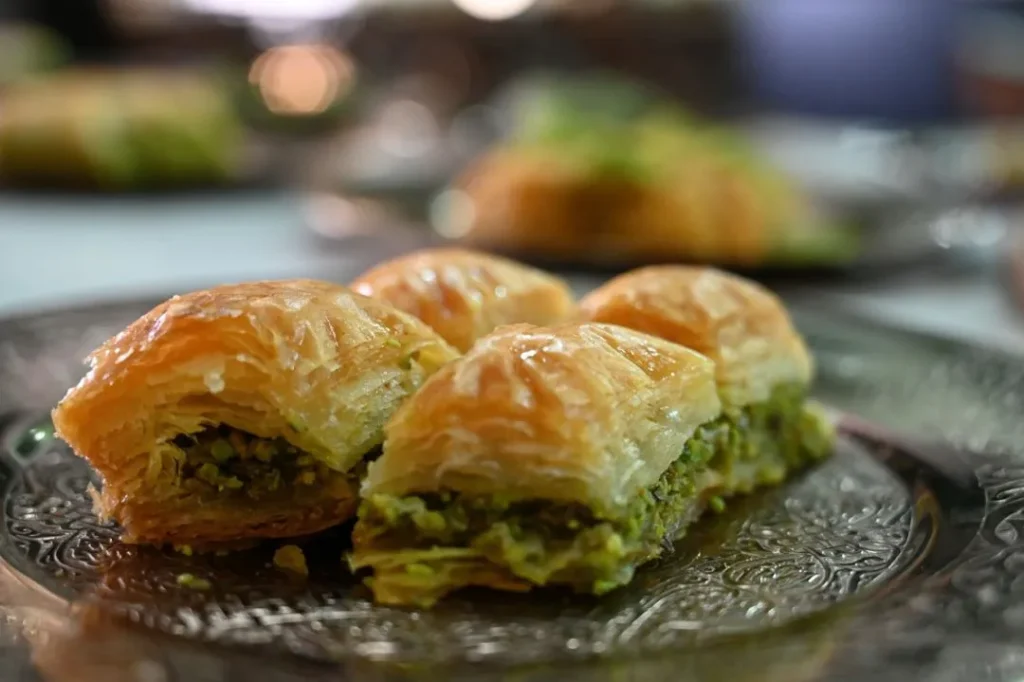
Baklava can last several days at room temperature when stored properly. It does not need refrigeration and is best kept in a cool, dry place so the phyllo stays crisp. Refrigerating baklava often softens the layers and dulls its texture.
Baklava is surprisingly sturdy when handled the right way. Because it’s made with baked phyllo, nuts, and syrup—not cream or custard—it holds up well without cold storage. What matters most is keeping moisture away from the pastry so the layers don’t lose their crunch.
How Long Baklava Typically Lasts?
- At room temperature: 3–5 days when covered loosely
- In an airtight container: Up to 5–7 days, depending on humidity
- Refrigerated: Not recommended (phyllo softens quickly)
Best Way to Store Baklava at Home
- Keep it at room temperature, away from heat and humidity
- Cover lightly with foil or parchment rather than sealing it tightly
- Avoid stacking pieces directly on top of each other
- Store it separately from foods with strong odors
Does Baklava Need to Be Refrigerated?
No. Refrigeration usually does more harm than good. The cold environment introduces moisture, which softens the phyllo and takes away the crisp texture that makes baklava enjoyable in the first place.
Can You Freeze Baklava?
Yes, baklava can be frozen, but it’s best done before it’s soaked too heavily in syrup. Freezing helps preserve flavor, but it can slightly soften the phyllo once thawed, so it’s a good option for saving leftovers—not for maintaining that just-baked crispness.
Freezing works when you’re thinking ahead or storing baklava for a special occasion. The key is managing moisture. Phyllo loves dryness, and the freezer introduces condensation during thawing, which is why texture can change if it’s not handled carefully.
How to Freeze Baklava the Right Way?
- Freeze before or lightly after syruping, not when fully soaked
- Wrap pieces individually in parchment, then place in an airtight container
- Label with the date to track freshness
- Freeze for up to 2–3 months for best quality
How to Thaw Frozen Baklava?
- Thaw slowly at room temperature, uncovered
- Avoid microwaving—it softens the layers
- Once thawed, enjoy within 24 hours
Freezing makes the most sense for extra pieces or catering trays, especially when baklava is part of a larger spread meant to be shared over time.
Types of Baklava You’ll Commonly See
Baklava comes in many forms, but the differences usually come down to nuts, sweetness level, and shape, not drastic changes in ingredients. Across Mediterranean cultures, the same foundation—phyllo, nuts, and syrup—shows up in slightly different expressions, each with its own character.
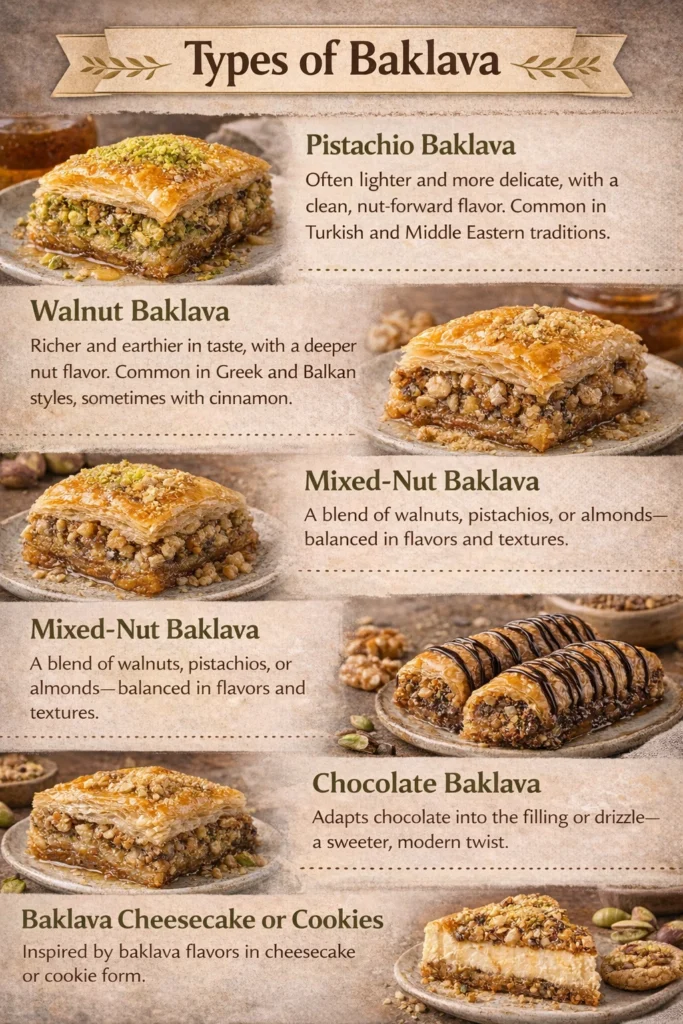
Common Types of Baklava
- Pistachio Baklava:
Often lighter and more delicate, with a clean, nut-forward flavor. This style is especially common in Turkish and Middle Eastern traditions and is usually less spiced, letting the pistachios stand out. - Walnut Baklava:
Richer and earthier in taste, with a deeper nut flavor. Walnut baklava is more common in Greek and Balkan styles and may include warm spice notes like cinnamon. - Mixed-Nut Baklava:
A blend of walnuts, pistachios, or almonds. This version balances flavors and textures, making it a good middle ground for people trying baklava for the first time. - Chocolate Baklava:
A modern variation that adds chocolate to the filling or drizzle. It’s sweeter and less traditional, often appealing to those who prefer familiar dessert flavors. - Baklava Cheesecake or Cookies:
Inspired by baklava rather than traditional forms. These reinterpret the flavor profile but don’t offer the same crisp layering or classic texture.
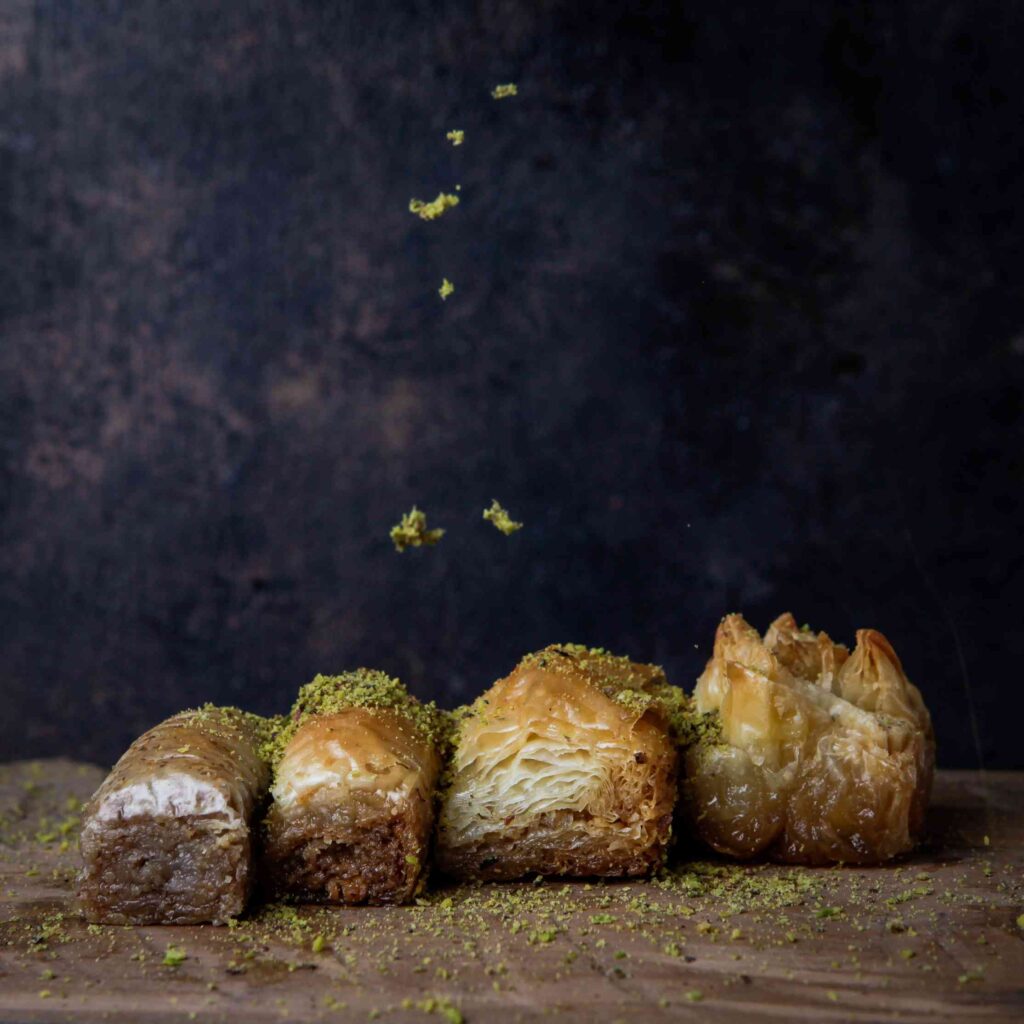
You’ll also notice baklava cut into different shapes—diamonds, squares, or rectangles—with the diamond cut being the most traditional and instantly recognizable.
When guests ask which type to choose, we usually suggest thinking about the meal first. Lighter pistachio baklava pairs well after grilled or savory dishes, while walnut baklava feels comforting after a longer, family-style meal.
How Baklava Is Traditionally Served After a Mediterranean Meal?
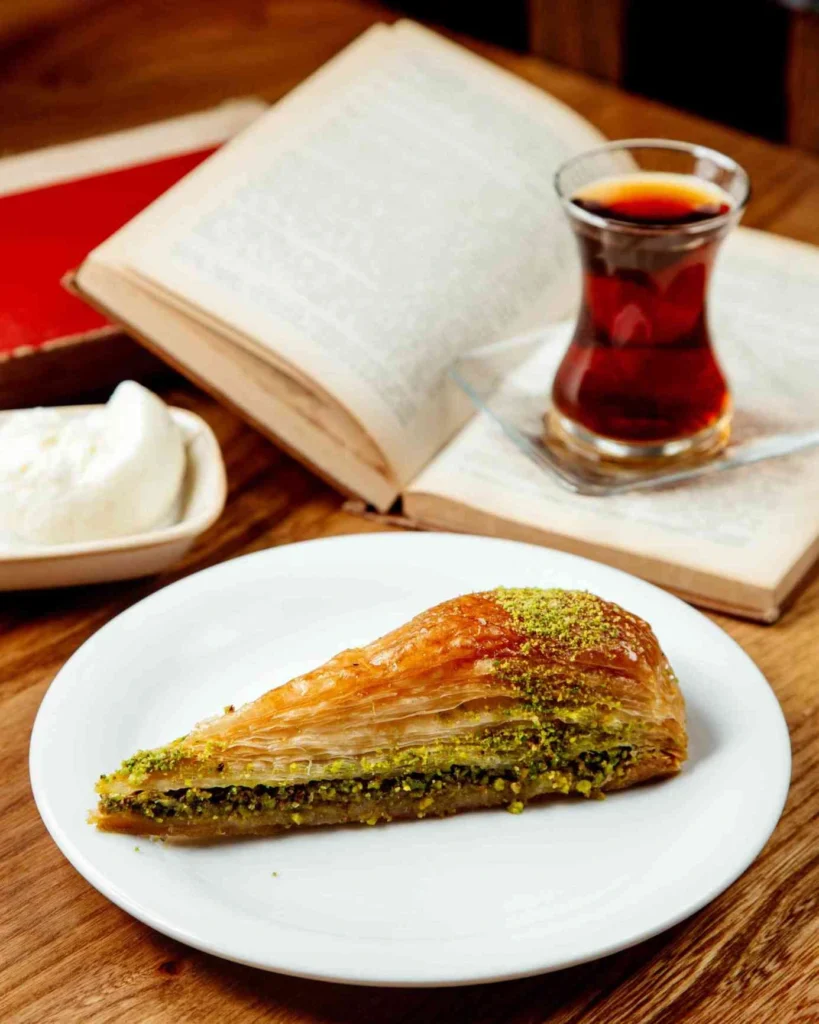
Baklava has always been a finishing touch, not the centerpiece. Traditionally, it’s served after savory dishes, once the main flavors have settled and people are ready for something sweet but structured. It’s meant to be shared, enjoyed slowly, and appreciated in small portions rather than rushed through.
In our experience, baklava fits naturally after bold, savory plates. After something spiced or grilled, the crisp layers and nutty sweetness feel balanced instead of heavy. That’s why many guests enjoy it after dishes like enjoy Baklava after Chicken Shawarma, where the warmth of the spices contrasts beautifully with the light sweetness of the dessert. It’s just as common to see people finish your Falafel meal with Baklava, especially when the meal is lighter and plant-based.
Why Baklava Works So Well After Savory Dishes?
- Served in small portions that feel satisfying
- Crisp texture contrasts well with savory dishes
- Nut-forward sweetness doesn’t overwhelm
- Designed for sharing, not overindulgence
At Micheline’s Pita House, we serve baklava the way it’s meant to be enjoyed—as a thoughtful finish to a Mediterranean meal, not an oversized dessert. It’s portioned for sharing, served crisp, and brought out when the savory dishes are done. Whether you’re dining in or ordering for a group, baklava is meant to complete the table, not overwhelm it.
Baklava for Catering, Sharing & Celebrations

Baklava has always been a dessert made for sharing, which is why it fits so naturally into gatherings and group meals. It travels well, doesn’t require utensils, and stays enjoyable over time, making it an easy choice when you want something sweet that feels thoughtful rather than excessive. At events, we often see people reach for one piece, enjoy it slowly, and come back later for another—exactly how it’s meant to be eaten.
For larger tables, we prepare baklava in tray-style portions designed for sharing, so everyone can help themselves without the dessert feeling heavy or rushed. Whether it’s a family gathering, an office lunch, or a celebration, baklava works as a quiet closer that brings the meal together. If you’re planning for a group, you can order Baklava for your Mediterranean feast.
Why baklava works so well for catering:
- Easy to serve and share, no plating needed
- Holds its texture better than creamy desserts
- Feels special without being overwhelming
- Works alongside both light and hearty Mediterranean meals
Baklava Overview – Frequently Asked Questions
Is baklava vegetarian?
Yes. Traditional baklava is vegetarian, as it’s made with phyllo dough, nuts, butter, and syrup or honey. It doesn’t contain meat or fish.
Does baklava have eggs?
No. Baklava does not typically contain eggs. The structure comes from layered phyllo dough, not batter or custard.
Does baklava have dairy?
Baklava usually contains butter, which means it does include dairy. There’s no milk or cream, but it’s not dairy-free unless specifically prepared that way.
Is baklava gluten-free?
No. Phyllo dough is made from wheat flour, so baklava is not gluten-free.
Is baklava full of sugar?
Baklava is sweet, but it’s not meant to be eaten in large portions. The syrup is balanced with nuts and crisp pastry, which is why one piece is usually enough.
Do you eat baklava hot or cold?
Baklava is best enjoyed at room temperature. This keeps the phyllo crisp and the flavors balanced. Hot baklava can feel too soft, and cold baklava can lose texture.
Baklava vs balaclava — what’s the difference?
They sound similar, but they’re completely unrelated. Baklava is a dessert, while a balaclava is a type of head covering.
Baklawa vs baklava — are they the same thing?
Yes. “Baklawa” and “baklava” refer to the same dessert—the spelling changes based on language and region.
What is “baclava”?
“Baclava” is simply a misspelling of baklava. It refers to the same pastry dessert.
Is baklava Greek or Turkish?
Baklava is part of a shared Mediterranean and Middle Eastern tradition. While Greece and Turkey each have their own styles, the dessert itself developed across regions over centuries rather than belonging to a single country.
Which country has the best baklava?
There’s no single “best” country. Preference usually comes down to nut choice, sweetness level, and texture—some people prefer pistachio-forward styles, while others enjoy walnut-based versions.
How many layers should baklava have?
Traditional baklava is made with many thin layers, often between 20 and 30 sheets of phyllo, depending on regional style. More layers create a lighter, crispier texture.
Does baklava need to be covered when stored?
Yes. Baklava should be lightly covered to protect it from air and moisture while still allowing the phyllo to stay crisp. Sealing it too tightly can soften the layers.
Is baklava anti-inflammatory?
Baklava isn’t considered an anti-inflammatory food. While nuts contain beneficial fats, baklava is best enjoyed as an occasional dessert rather than for health benefits.
Is baklava eaten with a fork or by hand?
Both are common. Small pieces are often eaten by hand, especially in casual settings, while forks are used in more formal dining.
Can baklava be made without honey?
Yes. Many traditional versions use sugar-based syrup rather than honey. The choice depends on regional style and personal preference.
Why is baklava cut before baking?
Baklava is cut before baking so the syrup can soak evenly through the layers after it comes out of the oven, while keeping the top crisp.
Is baklava served year-round or only on holidays?
Baklava is enjoyed year-round, but it’s especially common during celebrations, gatherings, and holidays because it’s easy to share and holds up well.
Is baklava better the next day?
Many people think so. Letting baklava rest allows the syrup to settle evenly through the layers while keeping the pastry crisp.
Does baklava expire quickly?
Baklava doesn’t spoil quickly, but its texture changes over time. It’s best enjoyed within a few days for optimal crispness.
Baklava: A Simple Mediterranean Dessert with Deep Roots
Baklava has lasted for generations because it gets the balance right. It’s crisp without being dry, sweet without being overwhelming, and rich without needing a large portion. Made from thin layers of phyllo, nuts, and syrup, it reflects the Mediterranean approach to dessert—something to enjoy slowly, share with others, and serve at the end of a good meal rather than in excess.
From its shared history across the Mediterranean and Middle East to the many regional styles people love today, baklava isn’t about rules or labels. It’s about texture, flavor, and the moment it’s served. Whether you prefer pistachios or walnuts, lighter syrup or a richer bite, baklava is meant to feel complete in just one or two pieces—especially after a savory dish.
Enjoy Baklava the Way It’s Meant to Be
At Micheline’s Pita House, we serve baklava as a natural finish to our Mediterranean meals—portion-friendly, nut-forward, and crisp, just as it should be. If you’d like to explore the styles we offer for dine-in or takeout, you can check our Baklava menu item