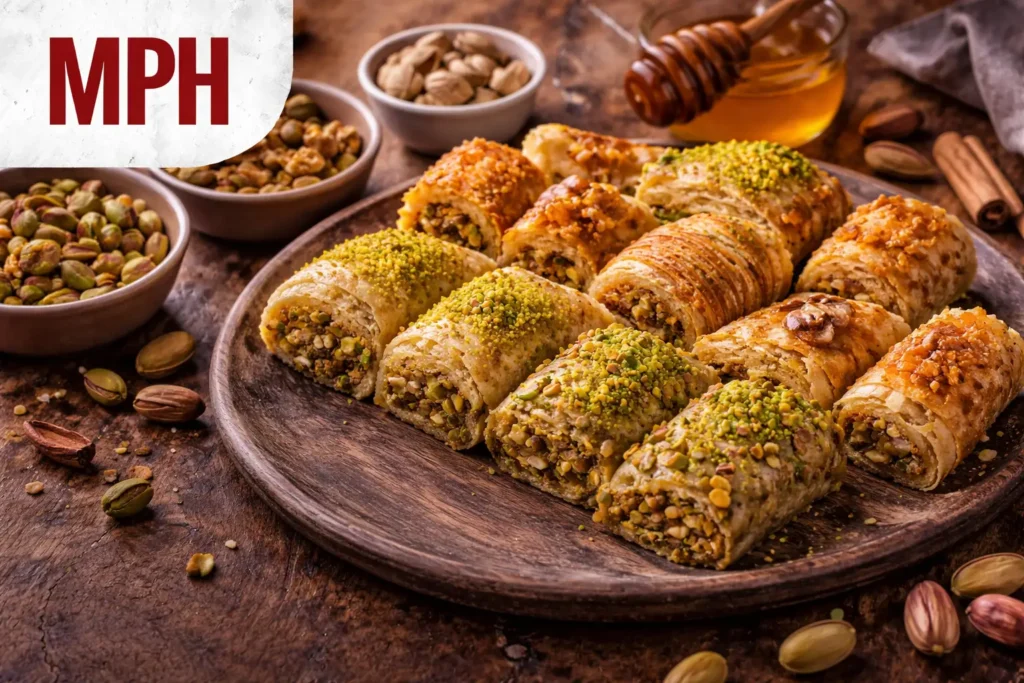
Baklava’s origin is widely debated, but most evidence points to ancient civilizations in Mesopotamia, Assyria, and Greece, with early versions dating as far back as 800–2800 B.C. Over time, these early layered desserts evolved, and the refined pastry we recognize today was perfected in the imperial kitchens of the Ottoman Empire (modern-day Turkey). From there, baklava spread across the Middle East, Greece, and Central Asia, becoming a shared culinary tradition across regions.
The dessert as we know it today was refined in the imperial kitchens of the Ottoman Empire, where thin layers of phyllo dough, nuts, and syrup were perfected into a luxurious treat. Over time, baklava spread across regions influenced by Ottoman culture, becoming a beloved staple in Mediterranean and Middle Eastern cuisine.
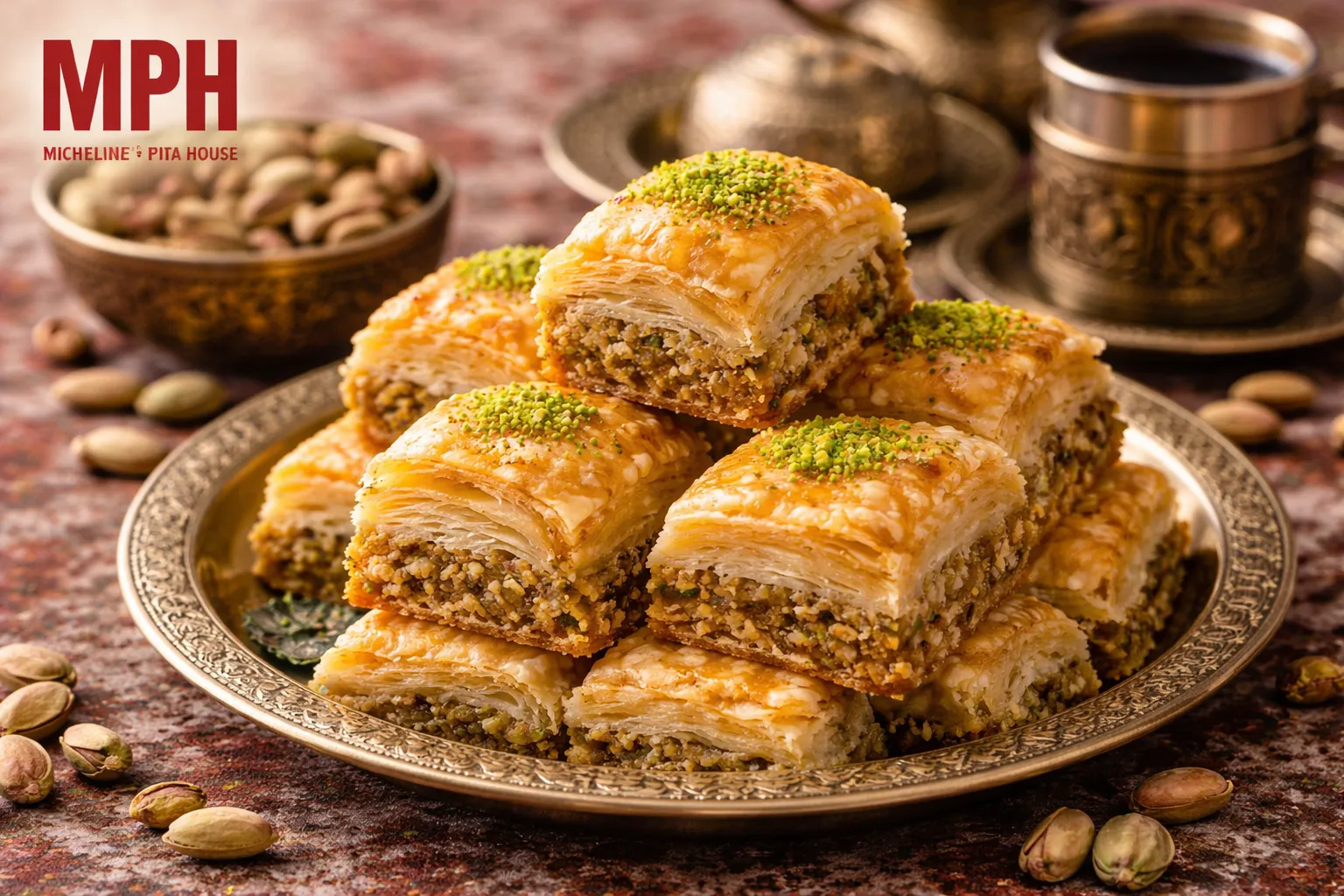
Where Does Baklava Come From?

The Ottoman Empire Connection
The most accurate answer to the Baklava origin question is the Ottoman Empire. This vast empire brought together diverse culinary traditions and refined them into iconic dishes, including baklava.
In Ottoman royal kitchens, chefs perfected:
- Ultra-thin phyllo dough layers
- Balanced syrup sweetness
- Precise layering techniques
This is where baklava transformed from simple layered bread-like desserts into the delicate, flaky pastry we know today.
Earlier Roots in Middle Eastern and Central Asian Cuisine
Before the Ottoman refinement, early versions of baklava-like desserts existed in:
- Ancient Mesopotamia
- Central Asian Turkic cultures
- Early Middle Eastern kitchens
These early forms were simpler, often made with layers of dough and nuts, but lacked the finesse of modern baklava.
The History of Baklava Explained Simply
Ancient Beginnings Before Baklava
Long before baklava existed, people in the Middle East were already combining:
- Thin breads or dough layers
- Crushed nuts
- Natural sweeteners like honey
These early desserts laid the foundation for what would eventually become baklava.
How the Ottoman Empire Perfected Baklava
During the height of the Ottoman Empire, baklava became a symbol of luxury and craftsmanship.
It was:
- Served in royal ceremonies
- Prepared by highly trained palace chefs
- Associated with wealth and celebration
This period is where baklava history truly takes shape, evolving into a recognizable dessert.
If you are curious to taste a version inspired by these traditions, you can explore our authentic baklava crafted with the same layered technique and rich flavor profile.
How Baklava Spread Across Greece, Turkey, and the Middle East
As the Ottoman Empire expanded, so did baklava.
It spread into:
- Greece
- Lebanon
- Syria
- The Balkans
Each region adapted the recipe based on local ingredients and preferences, creating the diverse versions we see today.
Is Baklava Greek or Turkish? Understanding the Debate
Turkish Baklava Traditions
In Turkey, baklava is typically:
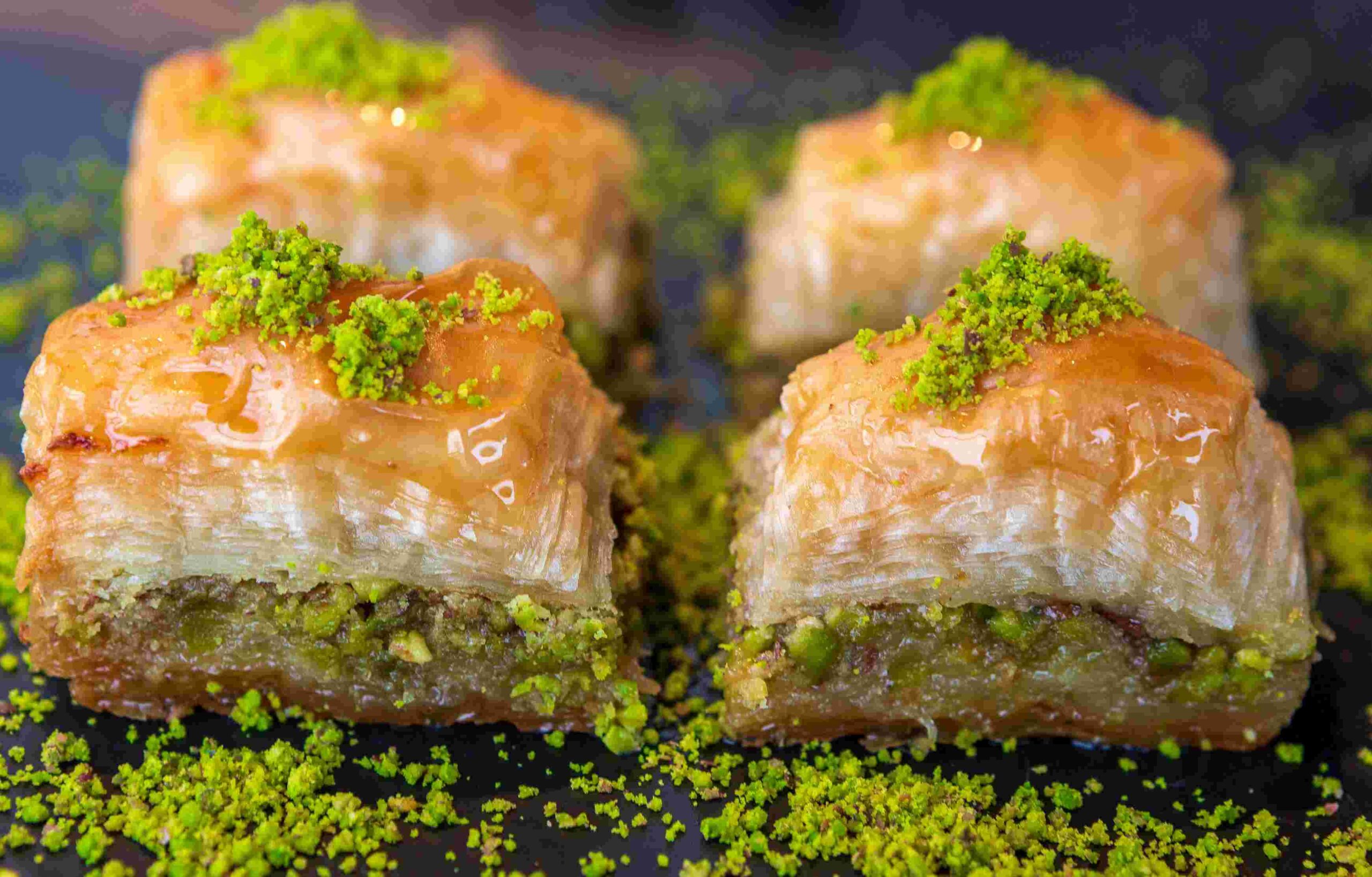
- Made with pistachios
- Lightly sweetened syrup
- Thin, crisp layers
Cities like Gaziantep are especially famous for producing some of the best baklava in the world.
Greek Baklava Variations
Greek baklava often includes:
- Walnuts instead of pistachios
- Cinnamon and spices
- A slightly heavier syrup
This gives it a deeper, more aromatic flavor.
Why Many Countries Claim Baklava
The truth is, baklava belongs to a shared culinary heritage.
Because it spread across multiple regions under Ottoman influence, many cultures:
- Adopted it
- Adapted it
- Claimed it as their own
So while Turkey is most closely tied to its origin, baklava is truly a Mediterranean and Middle Eastern classic.
How Baklava Differs Around the World

Ingredients and Preparation Differences
While the core concept remains the same, regional differences include:
- Nuts: pistachios, walnuts, or almonds
- Sweeteners: honey vs sugar syrup
- Dough thickness: ultra-thin vs slightly thicker layers
These variations give each version a distinct taste and texture.
Regional Flavors and Styles
Some popular styles include:
- Turkish baklava: lighter and crispier
- Greek baklava: richer and spiced
- Lebanese baklava: often more delicate and less sweet
Why Baklava Became a Mediterranean Staple
Baklava became widely popular because it:
- Uses simple, accessible ingredients
- Can be stored and shared easily
- Fits perfectly into social and celebratory traditions
If you enjoy exploring sweets like baklava, you can browse our Mediterranean desserts menu to discover more traditional favorites.
Frequently Asked Questions
Where is baklava originally from?
Baklava is originally from the Ottoman Empire, with earlier influences from Middle Eastern and Central Asian cuisines.
Who invented baklava?
Baklava was not invented by a single person. It evolved over centuries and was refined by chefs in the Ottoman Empire.
When was baklava invented?
Baklava as we know it today was developed during the Ottoman Empire, around the 15th century, although earlier versions existed before that.
What country is baklava from today?
Today, baklava is associated with several countries including Turkey, Greece, and Lebanon, but its strongest historical roots are in Turkey.
Is baklava Middle Eastern or Mediterranean?
Baklava is both. It is a shared dessert across Middle Eastern and Mediterranean cultures due to its spread during the Ottoman Empire.
Enjoy Authentic Baklava at Pita House
If learning about the baklava origin has you craving a taste, you can experience it fresh at Micheline’s Pita House. Our baklava is made with delicate layers, rich nuts, and perfectly balanced sweetness, inspired by traditional Mediterranean recipes.
Whether you are dining in or planning an event, explore our baklava catering options or visit our Mediterranean restaurant in San Diego to enjoy authentic flavors crafted with care.